
Distracted driving is one of the leading causes of serious crashes involving commercial trucks on Tennessee roads. For truck drivers, the danger isn’t just the distraction itself—it’s the sudden, unpredictable decisions distracted drivers make that leave professional CDL drivers with no time or space to react.
At Tennessee Accident Law, we represent truck drivers injured by distracted passenger vehicle drivers who were texting, scrolling, adjusting GPS, eating, or otherwise not paying attention. If you were hurt in a crash that wasn’t your fault, understanding how distracted driving claims work can help you protect your health, your income, and your future.
This article explains how distracted driving causes truck accidents, how fault is proven in Tennessee, and what injured truck drivers should do to strengthen their claims.
If you have immediate questions, call us at (615) 212-9866 or complete our free case evaluation form now.
What Is Distracted Driving?
Distracted driving occurs when a driver’s attention is diverted from the road. Distractions generally fall into three categories:
- Visual distractions: Taking eyes off the road (texting, GPS, looking at a phone)
- Manual distractions: Taking hands off the wheel (eating, reaching, holding a phone)
- Cognitive distractions: Taking mind off driving (daydreaming, conversations, stress)
Texting while driving is especially dangerous because it involves all three types at once.
Why Distracted Drivers Are So Dangerous Around Trucks
Commercial trucks require:
- Longer stopping distances
- Wider turning radiuses
- Predictable traffic behavior
Distracted drivers often:
- Drift between lanes
- Fail to notice slowing traffic
- Cut off trucks without signaling
- Brake suddenly or too late
- Miss traffic signals entirely
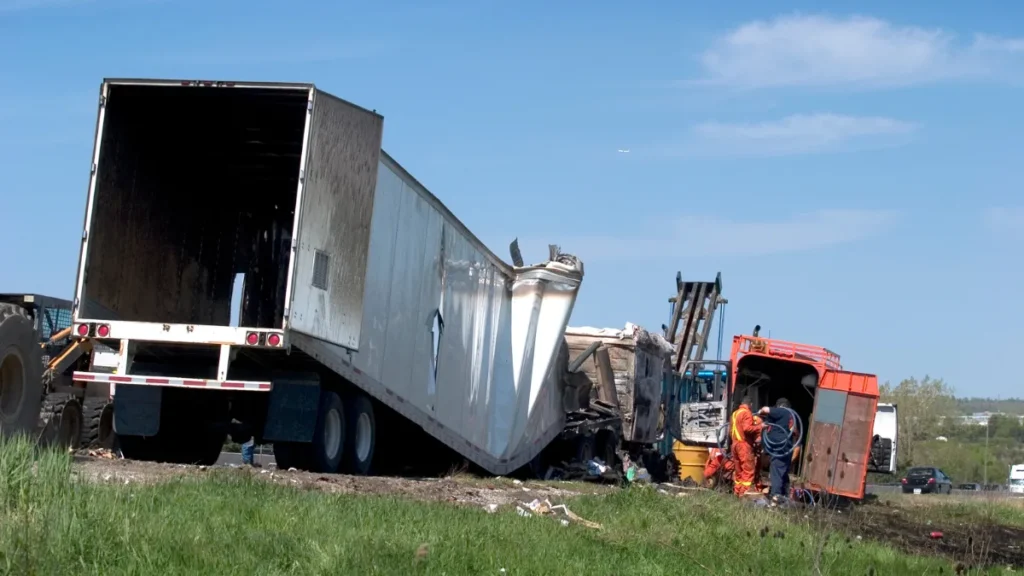
These behaviors frequently cause rear-end collisions, side-impact crashes, jackknifes, and multi-vehicle accidents involving trucks.
Common Distracted Driving Truck Accident Scenarios
Rear-End Collisions
Distracted drivers fail to notice slowing traffic and slam into the back of a tractor-trailer.
Unsafe Lane Changes
Drivers distracted by phones drift into a truck’s blind spot or cut in too closely.
Intersection Violations
Missed red lights and stop signs lead to devastating T-bone collisions.
Sudden Stops
Drivers realize too late they’re about to miss an exit or turn and brake abruptly in front of a truck.
Proving Distracted Driving in a Tennessee Truck Accident Case
Distracted driving is not assumed—it must be proven. Fortunately, modern evidence often tells the story clearly.
1) Phone Records
Cell phone records can show:
- Texting or data usage at the time of the crash
- Call activity during critical moments
- App usage that supports distraction claims
These records are powerful when properly subpoenaed.
2) Dash Cam and Video Evidence
Dash cams and surveillance footage may capture:
- Head-down behavior
- Lane drifting
- Failure to brake
- Erratic driving before impact
Video evidence is often decisive.
3) Witness Statements
Other motorists may observe:
- Phone use
- Swerving
- Delayed reactions
- Erratic behavior
Independent witness testimony carries significant weight.
4) ELD and Telematics Data
Truck data can show:
- Speed and braking patterns
- Sudden emergency responses
- Reasonable reaction times
This data often disproves insurer claims that the truck driver caused the crash.
5) Police Reports and Citations
Officers may note:
- Phone use admissions
- Distracted behavior indicators
- Citations for distracted driving violations
While not conclusive, these reports support the overall case.
Tennessee Distracted Driving Laws
Tennessee has enacted strict laws against distracted driving, including:
- A ban on hand-held phone use while driving
- Prohibitions on texting while driving
- Enhanced penalties in construction zones
Violation of these laws supports negligence claims.
Injuries Truck Drivers Commonly Suffer in Distracted Driving Crashes
Even when the truck driver does nothing wrong, distracted driving crashes can cause:
- Herniated discs and nerve damage
- Traumatic brain injuries
- Shoulder, knee, and joint injuries
- Spinal cord injuries
- Chronic pain conditions
- Psychological trauma, including anxiety and PTSD
These injuries often require long-term treatment and can threaten a CDL career.
Workers’ Compensation vs. Third-Party Claims
If you were driving for work, workers’ compensation may cover:
- Medical treatment
- Partial wage replacement
However, workers’ comp does not provide:
- Pain and suffering compensation
- Full lost income
- Future earning capacity damages
When a distracted driver causes the crash, you may pursue a third-party injury claim against that driver for full compensation—often alongside workers’ comp.
Tennessee Comparative Fault and Distracted Driving
Insurance companies may still attempt to assign fault to truck drivers by claiming:
- Failure to anticipate distraction
- Speed-related issues
- Improper lane positioning
Tennessee’s modified comparative fault system means even small fault percentages can reduce recovery. Strong evidence is essential.
Mistakes Injured Truck Drivers Should Avoid
- Giving recorded statements without legal guidance
- Saying “I’m fine” at the scene
- Delaying medical treatment
- Allowing phone data to be deleted
- Settling before understanding long-term injury impact
Each mistake weakens an otherwise strong claim.

How Tennessee Accident Law Handles Distracted Driving Truck Accident Cases
We build distracted driving cases with precision:
- Immediate evidence preservation
- Phone record subpoenas
- Data and video analysis
- Medical causation documentation
- Aggressive insurance negotiations
- Trial-ready preparation
We understand trucking, CDL demands, and Tennessee injury law.
Take Action Now—Before Evidence Disappears
If you were injured by a distracted driver while driving your route in Tennessee, don’t let insurance companies minimize what happened.
Complete our free case evaluation form and call us now at 615-212-9866. We’ll review your case, explain your options, and fight for the full compensation you deserve.
Sources
- Tennessee Department of Safety & Homeland Security – Distracted Driving Laws
Explains Tennessee’s hands-free and anti-texting laws.
https://www.tn.gov/safety/ - NHTSA – Distracted Driving Statistics and Prevention
Provides data on crash causation and distracted driving risks.
https://www.nhtsa.gov/road-safety/distracted-driving - FMCSA – Large Truck Crash Causation Study
Analyzes driver behavior factors in crashes involving commercial vehicles.
https://www.fmcsa.dot.gov/safety/data-and-statistics