One of the biggest dangers injured truck drivers face after a crash in Tennessee isn’t the injury itself—it’s comparative fault. Even when an accident was clearly not your fault, insurance companies often try to assign partial blame to reduce or eliminate what they pay.
At Tennessee Accident Law, we regularly see strong truck driver injury claims threatened by aggressive fault-shifting tactics. Understanding how Tennessee’s comparative fault system works—and how to defend against it—can make the difference between full compensation and walking away with far less than you deserve.
This article explains Tennessee comparative fault in plain terms, why truck drivers are frequent targets, and what steps you can take to protect your claim after an accident that wasn’t your fault.
If you have immediate questions, call us at (615) 212-9866 or complete our free case evaluation form now.
What Is Comparative Fault in Tennessee?
Tennessee follows a modified comparative fault rule.
Here’s how it works:
- You can recover compensation only if you are less than 50% at fault
- Your recovery is reduced by your percentage of fault
Example
If your damages total $500,000:
- At 10% fault → You recover $450,000
- At 30% fault → You recover $350,000
- At 50% fault → You recover nothing
This system gives insurance companies a powerful incentive to shift blame—even unfairly.
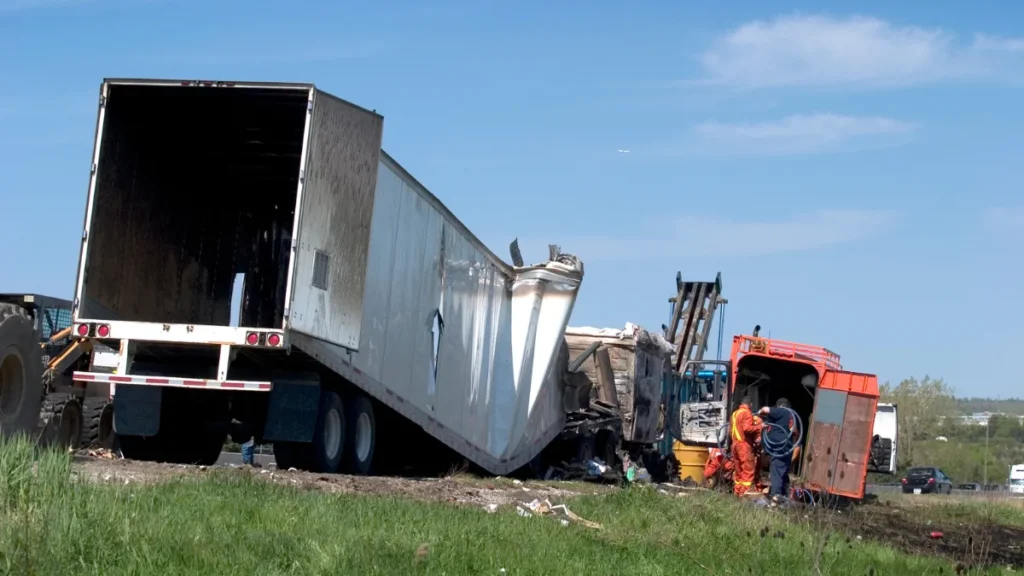
Why Truck Drivers Are Frequent Targets of Comparative Fault Claims
Truck drivers are held to higher scrutiny because:
- Commercial vehicles are heavily regulated
- CDL drivers are expected to be “professional”
- Trucks cause severe damage in crashes
- Jurors often assume the truck must be at fault
Insurance companies exploit these assumptions to push fault onto truck drivers—even when passenger vehicles caused the crash.
Common Ways Insurers Try to Assign Fault to Truck Drivers
“You Should Have Anticipated It”
Insurers may argue that you should have predicted another driver’s reckless behavior. Tennessee law does not require drivers to anticipate illegal actions by others.
“You Were Driving Too Fast for Conditions”
Even when you were within legal speed limits, insurers may argue weather or traffic conditions required slower speeds—often without evidence.
“You Braked Too Hard or Too Late”
In rear-end and jackknife cases, insurers often claim improper braking. ELD and ECM data frequently disproves this.
“You Violated a Regulation”
Minor or unrelated regulatory issues are sometimes exaggerated to imply fault—despite having no causal connection to the crash.
“You Were Distracted”
Insurers may suggest phone use or in-cab distraction without proof, hoping to create doubt.
Why Partial Fault Claims Are So Dangerous
Even a small fault percentage can:
- Slash settlement value
- Strengthen insurance negotiation leverage
- Discourage full medical compensation
- Push claims toward unnecessary litigation
Once fault percentages enter the conversation, insurers rarely increase offers without strong evidence pushing back.
Evidence That Protects Truck Drivers from Comparative Fault
1) Dash Cam Footage
Dash cams often capture:
- Sudden cut-offs
- Red-light violations
- Erratic driving by other vehicles
- Normal, safe operation of the truck
2) ELD, Telematics, and ECM Data
Electronic data shows:
- Speed consistency
- Brake timing
- Throttle input
- Sudden emergency responses
This data often eliminates speculation about truck driver behavior.
3) Accident Reconstruction
Professional reconstruction converts physical evidence into objective conclusions about:
- Reaction times
- Avoidance possibilities
- Fault allocation
4) Witness Statements
Independent witnesses can confirm:
- Negligence by the other driver
- Reasonable reactions by the truck driver
5) Medical Documentation
Consistent treatment helps counter arguments that injuries were pre-existing or exaggerated.
Tennessee’s Sudden Emergency Doctrine: A Powerful Defense
Tennessee recognizes the sudden emergency doctrine, which protects drivers who:
- Face an unexpected danger
- Did not create the emergency
- Respond reasonably under the circumstances
Truck drivers forced into evasive maneuvers due to another driver’s negligence often fall squarely under this protection.
Comparative Fault in Common Truck Accident Scenarios
Rear-End Crashes
Insurers may claim sudden braking—but data often shows gradual deceleration.
Jackknife Accidents
Claims of “loss of control” are countered by evidence of cut-offs or brake-checking.
Intersection Collisions
Truck drivers are entitled to rely on traffic signals and right-of-way rules.
Multi-Vehicle Crashes
Fault is often spread unfairly without proper reconstruction.
How Early Mistakes Increase Fault Risk
Truck drivers unintentionally increase fault exposure by:
- Giving recorded statements without legal guidance
- Apologizing at the scene
- Speculating about causes
- Delaying medical care
- Allowing evidence to be overwritten
Each mistake gives insurers leverage.
Workers’ Compensation and Comparative Fault
Workers’ comp does not consider fault—but third-party claims do. That’s why careful coordination between claims is critical.
Statements made in workers’ comp claims can be used against you in third-party litigation if not handled properly.

How Tennessee Accident Law Protects Truck Drivers from Unfair Fault
We protect our clients by:
- Preserving electronic and video evidence immediately
- Controlling the narrative early
- Identifying and countering fault-shifting tactics
- Using expert analysis to establish liability
- Preparing every case as if it will go to trial
Our goal is simple: keep fault where it belongs.
Take Action Before Fault Is Assigned to You
If you’re an injured truck driver in Tennessee and the accident was not your fault, don’t let insurance companies rewrite the story.
Complete our free case evaluation form and call us now at 615-212-9866. We’ll review your case, explain how comparative fault applies, and fight to protect the full value of your claim.
Sources
- Tennessee Administrative Office of the Courts – Comparative Fault Overview
Explains Tennessee’s modified comparative fault system and how fault impacts recovery.
https://www.tncourts.gov/ - FMCSA – Large Truck Crash Causation Study
Provides data and analysis on factors contributing to truck crashes.
https://www.fmcsa.dot.gov/safety/data-and-statistics - NHTSA – Crash Causation and Driver Behavior
Details how driver behavior, distraction, and impairment affect crash responsibility.
https://www.nhtsa.gov/road-safety