Artificial intelligence (AI) and automation are rapidly transforming the trucking industry. From driver-assist technology and predictive safety systems to semi-autonomous and autonomous commercial trucks, these innovations are changing how accidents happen — and how liability is determined after a crash.
In Tennessee, where major freight corridors like I-40, I-65, I-24, and I-75 carry heavy commercial traffic, AI-driven trucking technology raises new and complex legal questions. When a truck equipped with advanced automation is involved in an accident, who is legally responsible — the driver, the trucking company, the technology provider, or all three?
At Tennessee Accident Law, we closely follow how AI and automation affect truck accident investigations and litigation. This article explains how these technologies work, how they influence fault and liability, and what injured victims should know as trucking enters a more automated future.
If you have immediate questions, call us at (615) 212-9866 or complete our free case evaluation form now.
What AI and Automation Mean in the Trucking Industry
AI and automation in trucking exist on a spectrum — not all “automated” trucks are fully self-driving.
Common AI and automation technologies include:
- Adaptive cruise control
- Automatic emergency braking (AEB)
- Lane departure warning systems
- Lane-keeping assist
- Blind-spot monitoring
- Driver-facing monitoring systems
- Collision avoidance technology
- Predictive maintenance systems
Many trucks on Tennessee roads already use some combination of these features.
Levels of Automation in Commercial Trucks
Understanding automation levels is key to determining liability.
Level 0–1: Driver Assistance
- Human driver fully controls the truck
- AI provides warnings or limited assistance
Level 2: Partial Automation
- AI assists with steering and speed
- Driver must remain engaged at all times
Level 3–4: Conditional/High Automation
- AI performs most driving tasks
- Human intervention required in certain situations
Level 5: Full Automation
- No human driver required (not yet widely deployed)
Most trucks currently operating in Tennessee fall within Levels 1–2, but higher levels are being tested.
How AI Changes Truck Accident Investigations
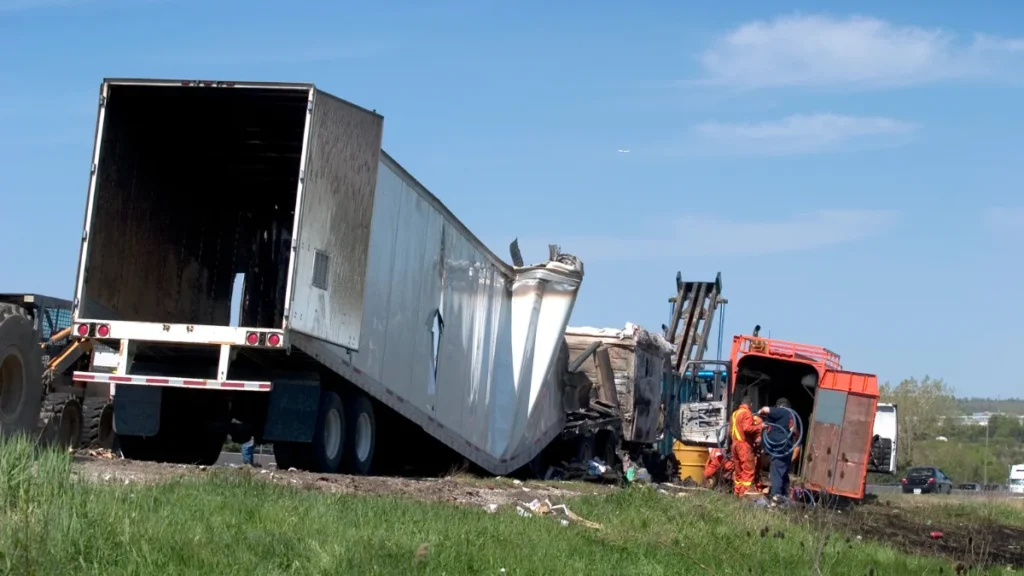
Automation introduces new sources of evidence — and new points of failure.
Key AI-related evidence includes:
- System activation logs
- Sensor data
- Software version records
- Update and maintenance histories
- Driver override records
- Camera and radar data
This information can show:
- Whether safety systems were functioning
- Whether the driver ignored warnings
- Whether the system malfunctioned
- Whether updates or recalls were ignored
Who Can Be Liable in AI-Related Truck Accidents
AI and automation often expand, rather than limit, liability.
Potentially liable parties include:
- The truck driver
- The trucking company
- The technology manufacturer
- Software developers
- Sensor or hardware suppliers
- Maintenance providers
Determining liability requires technical analysis and expert testimony.
Driver Responsibility in Automated Truck Crashes
Even with advanced automation, drivers often retain legal responsibility.
Common driver-related issues include:
- Overreliance on automation
- Failure to monitor systems
- Ignoring alerts or warnings
- Improper system use
- Distracted driving
In partial automation systems, the driver is still expected to maintain control.
Trucking Company Liability in Automated Systems
Trucking companies may be liable if they:
- Failed to train drivers on AI systems
- Encouraged overreliance on automation
- Ignored known system issues
- Failed to install required updates
- Deployed unsafe technology prematurely
Corporate decisions around automation often play a central role in liability.
Product Liability and AI Technology Failures
When AI systems malfunction, product liability claims may apply.
Common issues include:
- Software defects
- Faulty sensors
- Inadequate system warnings
- Poor human-machine interface design
- Failure to account for real-world driving conditions
Manufacturers may be held responsible if defective technology contributes to a crash.
How Federal and State Regulations Affect AI Truck Liability
Federal regulators are still adapting to automation.
Key regulatory factors include:
- FMCSA safety standards
- NHTSA vehicle technology guidance
- State-level testing and deployment rules
In Tennessee, courts often rely on:
- Federal safety standards
- Industry best practices
- Reasonable safety expectations
Regulatory gaps do not eliminate liability — they often increase litigation complexity.
Comparative Fault in AI-Related Truck Accidents
Automation complicates comparative fault analysis.
Possible fault allocations include:
- Driver error
- Company policy failures
- Technology design flaws
- Maintenance failures
Insurers may attempt to shift blame between parties — making expert analysis essential.
How AI Evidence Can Strengthen Victims’ Claims
When preserved properly, AI data can:
- Prove system failures
- Expose ignored warnings
- Disprove false blame claims
- Establish corporate negligence
- Increase settlement leverage
Objective system data often carries significant weight with juries.
Challenges Victims Face in AI-Related Truck Accident Cases
These cases are complex and resource-intensive.
Common challenges include:
- Evidence access restrictions
- Proprietary software claims
- Technical defenses
- Multiple defendants
- Aggressive litigation tactics
Without experienced legal representation, victims may struggle to uncover the truth.
Why Early Legal Action Is Even More Important
AI-related evidence can be:
- Overwritten
- Updated
- Remotely altered
- Lost during repairs
Immediate legal action ensures:
- Preservation of digital data
- Proper forensic analysis
- Control of the investigation

How Tennessee Accident Law Handles AI Truck Accident Cases
Our firm is prepared for the future of trucking litigation.
We:
- Act quickly to preserve digital evidence
- Work with technology and reconstruction experts
- Analyze system logs and sensor data
- Identify all responsible parties
- Prepare cases for trial
As trucking technology evolves, so does our legal strategy.
What Tennessee Drivers Should Know
AI and automation may improve safety — but they also introduce new risks.
If you’re injured in a truck accident involving advanced technology:
- Do not assume fault is unclear
- Do not accept early explanations
- Do not speak to insurers without counsel
These cases often involve more liability — not less.
Get Help After an AI-Related Truck Accident
The future of trucking is here — and so are new legal challenges.
Call Tennessee Accident Law at 615-212-9866
Or request your free case evaluation here:
https://tennesseeaccident.law/free-case-evaluation/
We understand the technology. We understand the law. And we fight for your rights.
Sources
- National Highway Traffic Safety Administration (NHTSA) — Automated vehicle safety guidance
https://www.nhtsa.gov - Federal Motor Carrier Safety Administration (FMCSA) — Commercial vehicle technology and safety
https://www.fmcsa.dot.gov - U.S. Department of Transportation (DOT) — Automated transportation initiatives
https://www.transportation.gov