Tennessee’s highways are some of the busiest freight corridors in the Southeast. With thousands of commercial trucks traveling I-65, I-24, I-40, and State Route 840 every day, collisions are an unfortunate — and often devastating — reality. These massive vehicles outweigh passenger cars by tens of thousands of pounds, meaning even a “minor” mistake by a truck driver or trucking company can result in catastrophic consequences.
At Tennessee Accident Law, we’ve seen firsthand how preventable these crashes truly are. Most Tennessee truck accidents are not “accidents” at all — they are the predictable result of negligence, regulation violations, and pressure to meet delivery schedules at any cost.
This article breaks down the leading causes of truck accidents in Tennessee and offers practical steps drivers can take to stay safe, as well as insight into how victims can protect their legal rights.
Call us now at 615-212-9866 to speak with an experienced attorney about your truck accident case.
1. Driver Fatigue — The #1 Cause of Truck Crashes
Truck drivers often work grueling schedules, covering long distances with few breaks. Even though the Federal Motor Carrier Safety Administration (FMCSA) imposes strict Hours-of-Service (HOS) limits, many drivers exceed them due to:
- Unrealistic company delivery deadlines
- Pressure from dispatchers
- Personal financial incentives
- Logbook or electronic logging device (ELD) manipulation
Fatigued drivers suffer from slowed reaction times, impaired judgment, and even “micro-sleep” episodes behind the wheel.
How to Avoid It
For passenger vehicle drivers:
- Avoid lingering in a truck’s blind spots.
- Give trucks extra space — especially at night.
- If a truck is weaving, drifting, or braking late, assume fatigue.
For victims:
If fatigue is suspected, Tennessee Accident Law secures ELD data, employer schedules, and eyewitness testimony to prove negligence.
2. Distracted Driving — A Growing Threat on Tennessee Highways
Distracted driving is a leading cause of truck accidents across the state. Truckers often multitask, using:
- GPS systems
- Dispatch communication devices
- Smartphones
- Digital logs and onboard computers
Because trucks require longer stopping distances, even one second of distraction can lead to a deadly collision.
How to Avoid It
Stay clear of trucks that:
- Drift between lanes
- Have inconsistent speed
- Brake suddenly with no traffic change
If struck by a distracted driver, our firm secures phone records, cab video, and black box data to prove distraction.
3. Speeding and Aggressive Driving
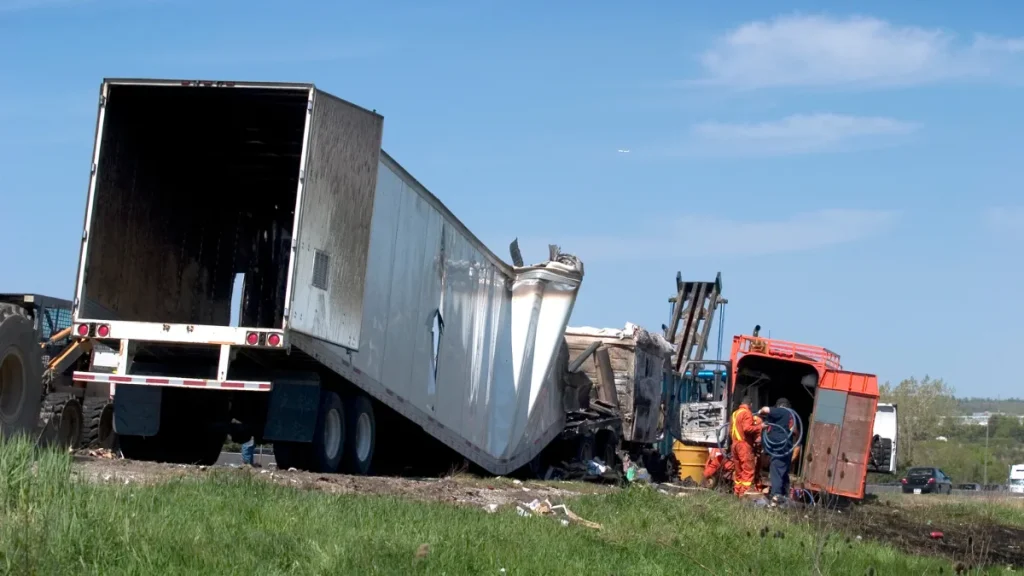
Speeding is especially dangerous for multi-ton commercial trucks. Tennessee sees thousands of speed-related commercial vehicle crashes each year on I-40, I-75, and I-65, where drivers descend steep grades and navigate high-traffic areas.
Common aggressive behaviors include:
- Tailgating
- Sudden lane changes
- Ignoring construction zone limits
How to Avoid It
If a truck is speeding or driving aggressively:
- Move safely away
- Change lanes when possible
- Notify law enforcement if the behavior is extreme
Aggressive driving often triggers punitive damages in Tennessee injury cases.
4. Poor Truck Maintenance and Mechanical Failures
Commercial trucks can travel over 100,000 miles annually, making maintenance critical. Yet many trucking companies cut corners to save money, leading to failures such as:
- Brake malfunctions
- Tire blowouts
- Steering or suspension failure
- Lighting or signal malfunction
- Transmission issues
How to Avoid It
Watch for trucks with:
- Smoking brakes
- Shaking or wobbling trailers
- Visibly worn tires
- Unsecured cargo
When mechanical failure leads to injury, we examine maintenance logs, FMCSA inspection records, and manufacturer defects.
5. Improperly Loaded or Overloaded Cargo
Cargo must be secured correctly to prevent:
- Rollovers
- Jackknifes
- Lost cargo hazards
- Shifting weight that destabilizes the truck
When trucking companies violate FMCSA cargo securement standards, the consequences can be catastrophic.
How to Avoid It
Stay alert around:
- Tanker trucks
- Open-bed trailers
- Logging trucks
- Vehicles carrying industrial equipment
If cargo spills or shifts, shippers, loaders, and carriers can all be held liable.
6. Impaired Driving — Drugs and Alcohol
While most truckers follow the law, impaired driving still occurs, particularly involving:
- Prescription medications
- Stimulants used to stay awake
- Alcohol
- Illegal substances
How to Avoid It
Report erratic driving, such as:
- Drifting across lanes
- Unpredictable braking
- Delayed response to traffic lights
Tennessee Accident Law obtains toxicology reports, employment records, and drug testing history to establish fault.
7. Blind Spots (“No-Zones”)
Commercial trucks have massive blind spots on all four sides. Many Tennessee crashes occur when:
- A truck changes lanes
- A car moves into the blind spot during merging
- Drivers fail to anticipate a truck’s wide turns
How to Avoid It
If you can’t see the driver in the truck’s mirrors, assume they cannot see you.
8. Road and Weather Conditions
Tennessee weather is unpredictable. Heavy rain, fog, snow, and black ice increase stopping distances and reduce visibility.
This is especially dangerous for trucks on:
- I-65 in Williamson County
- Monteagle Mountain on I-24
- I-40 approaching Knoxville
How to Avoid It
Increase following distance and slow down near trucks during poor weather conditions. Trucks cannot stop as quickly — especially on wet pavement.
9. Inexperienced or Poorly Trained Drivers
Tennessee faces a nationwide shortage of truck drivers, causing many companies to fast-track inexperienced drivers.
Lack of proper training leads to:
- Gear misuse
- Trailer swing or drift
- Incorrect braking on curves
- Underestimating stopping distances
How to Avoid It
Give inexperienced drivers extra room. If a truck is swaying or braking poorly, create distance.
10. Failure to Follow Federal Safety Regulations
FMCSA regulations govern:
- Hours of Service
- Vehicle maintenance
- Driver qualification
- Cargo securement
- Drug and alcohol testing
Violations often signal systemic company negligence, which strengthens your case significantly.

If You’re Injured in a Tennessee Truck Accident, Here’s What to Do
Your actions after a crash can protect your health and your legal rights.
We recommend:
- Calling 911 and seeking medical care
- Taking photos or videos of the scene
- Avoiding conversations with the trucking company or insurer
- Preserving all documents and evidence
- Contacting an experienced Tennessee truck accident attorney
Trucking companies move fast to protect themselves — so should you.
Why Tennessee Accident Law
Our firm brings:
- 20+ years of truck accident litigation experience
- Deep knowledge of FMCSA regulations and Tennessee law
- A proven track record against large trucking carriers and insurers
- Plaintiff-only representation
- Full-scale investigations including black box retrieval, expert reconstruction, and corporate compliance review
We fight to ensure you receive full compensation for medical bills, lost wages, pain and suffering, and long-term damages.
Take Action Today
If you or a loved one has been injured in a truck accident anywhere in Tennessee, you deserve answers — and justice.
Contact Tennessee Accident Law for a free case evaluation or call 615-212-9866.
We’ll hold negligent companies accountable and protect your rights every step of the way.
Sources
- Federal Motor Carrier Safety Administration (FMCSA) — Trucking regulations and safety data.
- Tennessee Department of Safety & Homeland Security — State crash statistics and highway safety data.
- National Highway Traffic Safety Administration (NHTSA) — Research on fatigue, distraction, and commercial vehicle safety.