When an Amazon delivery truck causes a serious crash, victims often face life-changing injuries and endless uncertainty. These collisions aren’t simple fender benders—they involve large commercial vehicles, corporate insurance policies, and complex layers of liability. At Tennessee Accident Law, we’ve seen how corporate negligence plays a direct role in many of these tragedies.
Amazon’s rapid expansion and pressure for same-day deliveries have created an environment where safety sometimes takes a backseat to speed. If you or a loved one has been injured in a crash involving an Amazon vehicle, understanding how corporate negligence affects your case can make all the difference in your claim’s success.
Call us now at 615-212-9866 to speak with an experienced attorney about your truck accident case.
Corporate Negligence in Amazon Truck Accidents
Corporate negligence occurs when a company fails to implement proper safety standards, training, or oversight that could have prevented harm. In the context of Amazon, this often includes:
- Rushing delivery schedules that pressure drivers to break safety rules
- Inadequate vehicle inspections or maintenance
- Failure to properly vet or train delivery drivers
- Lack of supervision or enforcement of safety policies
Amazon’s delivery model relies heavily on third-party contractors, known as “Delivery Service Partners” (DSPs). While these contractors technically operate independently, Amazon maintains significant control over operations, including vehicle branding, routes, and performance metrics. This “control factor” is what makes corporate negligence claims against Amazon viable under Tennessee law.
How Tennessee Law Defines Corporate Liability
Under Tennessee negligence law, any company that exerts control over the work or safety of its drivers can be held responsible for their actions. This includes:
- Failing to maintain safe working conditions
- Encouraging unsafe practices for profit
- Neglecting maintenance and safety compliance
When these failures lead to injury or death, victims can pursue damages against the corporation. Tennessee’s comparative fault system allows multiple defendants—such as the driver, the local contractor, and Amazon itself—to share liability based on their level of negligence.
At Tennessee Accident Law, we’ve built cases where the evidence clearly showed that corporate decisions—not just driver error—were the true cause of the crash.
Examples of Corporate Negligence in Amazon Truck Crashes
Here are real-world ways corporate negligence can lead to catastrophic truck accidents in Tennessee:
- Unrealistic Delivery Expectations
Amazon’s strict deadlines encourage speeding and fatigue, increasing the risk of crashes on interstates like I-40 and I-65. - Insufficient Driver Screening
Contractors may hire inexperienced drivers to meet staffing demands without adequate training or commercial driving experience. - Poor Vehicle Maintenance
Amazon trucks and vans that skip inspections or drive on worn tires or faulty brakes pose a serious danger. - Failure to Enforce Rest Breaks
Ignoring federal Hours-of-Service limits leads to driver exhaustion—a top cause of deadly truck collisions. - Pressure to Ignore Safety Protocols
Internal delivery metrics reward speed over safety, indirectly incentivizing drivers to cut corners.
When corporate policies contribute to unsafe practices, Amazon’s liability may extend beyond its local contractor to the parent company itself.
Building a Strong Amazon Truck Accident Lawsuit
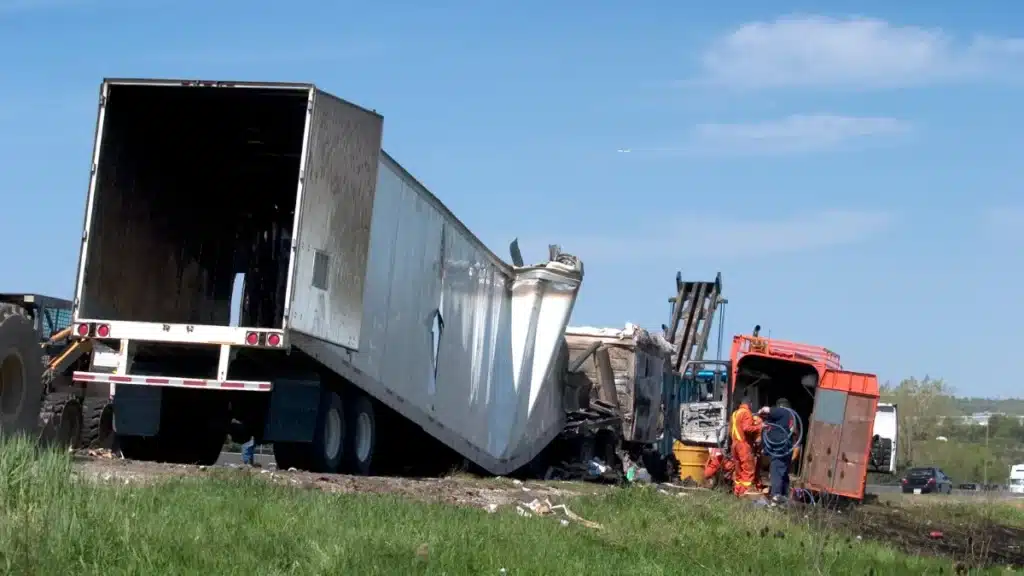
To win against a corporate defendant like Amazon, evidence is everything. Our attorneys take immediate steps to secure:
- Driver logs and delivery schedules
- Amazon’s internal communications and safety manuals
- Electronic logging device (ELD) and black box data
- Maintenance and inspection records
- Witness statements and accident reconstruction reports
We work with expert witnesses in trucking safety, logistics, and accident reconstruction to prove how corporate negligence directly caused or contributed to the collision.
What Damages Can Victims Recover?
In Tennessee, victims of Amazon truck accidents can seek compensation for both economic and non-economic damages, including:
- Medical expenses (past and future)
- Lost wages and loss of earning potential
- Pain and suffering
- Emotional distress
- Property damage
- Punitive damages (in cases of extreme corporate misconduct)
Punitive damages are especially relevant when companies knowingly ignore safety standards or engage in reckless practices to increase profit margins.
Why These Cases Are Different
Amazon accident claims aren’t like ordinary car accidents. The company’s legal structure is designed to limit its exposure by operating through third-party contractors. That’s why proving corporate control and negligence is key.
Our firm knows how to connect the dots between Amazon’s internal operations and the delivery driver’s conduct. We investigate everything from employment contracts to GPS data to show the full chain of liability.

Why Choose Tennessee Accident Law
At Tennessee Accident Law, we’ve successfully handled complex trucking cases against major corporations. Our firm combines deep legal experience with an aggressive, compassionate approach to client care.
We are:
- Plaintiff-only attorneys who fight exclusively for victims
- Experienced trial lawyers unafraid to take on billion-dollar corporations
- Local Tennessee advocates with offices in Franklin and Nashville
We understand the physical, emotional, and financial toll of truck accidents—and we stand ready to fight for the justice you deserve.
What To Do Next
If you’ve been involved in an Amazon truck accident in Tennessee, don’t delay. Corporate legal teams act fast to protect their interests. The sooner you have representation, the stronger your case will be.
Contact Tennessee Accident Law today for a free case evaluation or call 615-212-9866 to speak directly with an experienced Tennessee truck accident attorney. We’ll review your claim, preserve critical evidence, and pursue full compensation for your injuries.
Sources
- Federal Motor Carrier Safety Administration (FMCSA) — Federal trucking safety and carrier compliance regulations.
- Tennessee Department of Safety & Homeland Security — Crash reporting and commercial driver requirements.
- National Highway Traffic Safety Administration (NHTSA) — Truck accident statistics and safety data across the U.S.