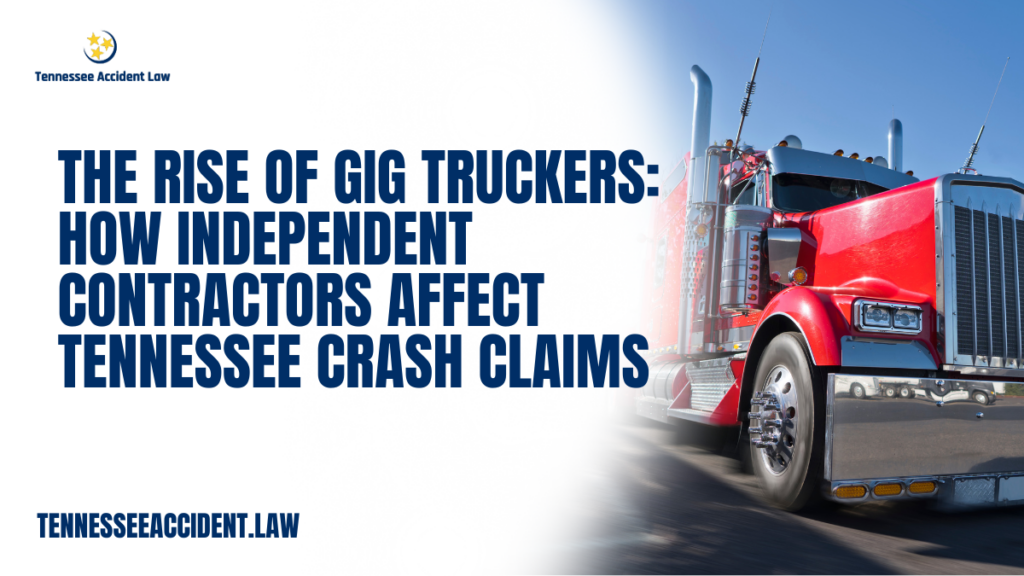
The trucking industry is undergoing a major shift. In an effort to cut costs, increase flexibility, and respond to ongoing driver shortages, many trucking companies are relying more heavily on independent contractor and gig-based truck drivers rather than traditional employees. While this model may benefit companies financially, it creates serious legal and safety concerns — especially when a crash occurs.
In Tennessee, accidents involving so-called “gig truckers” often lead to confusing liability disputes, delayed claims, and aggressive attempts by companies to avoid responsibility. At Tennessee Accident Law, we frequently encounter trucking companies that claim they are not liable simply because a driver was labeled an independent contractor.
This article explains the rise of gig trucking, how independent contractor status affects truck accident claims in Tennessee, and how experienced lawyers uncover the truth behind misclassification.
If you have immediate questions, call us at (615) 212-9866 or complete our free case evaluation form now.
What Are Gig Truckers?
Gig truckers are drivers who are classified as independent contractors rather than employees. They may:
- Own or lease their own trucks
- Be paid per load or mile
- Work for multiple companies or brokers
- Use freight-matching or dispatch platforms
- Sign contracts labeling them as “non-employees”
Despite these labels, many gig truckers operate under conditions that closely resemble traditional employment.
Why Trucking Companies Use Independent Contractors
Trucking companies often prefer contractor models because it allows them to:
- Avoid payroll taxes
- Reduce insurance costs
- Limit liability exposure
- Avoid providing benefits
- Shift operational responsibility to drivers
From a legal perspective, the biggest motivation is often liability avoidance after serious accidents.
How Gig Trucking Increases Accident Risk
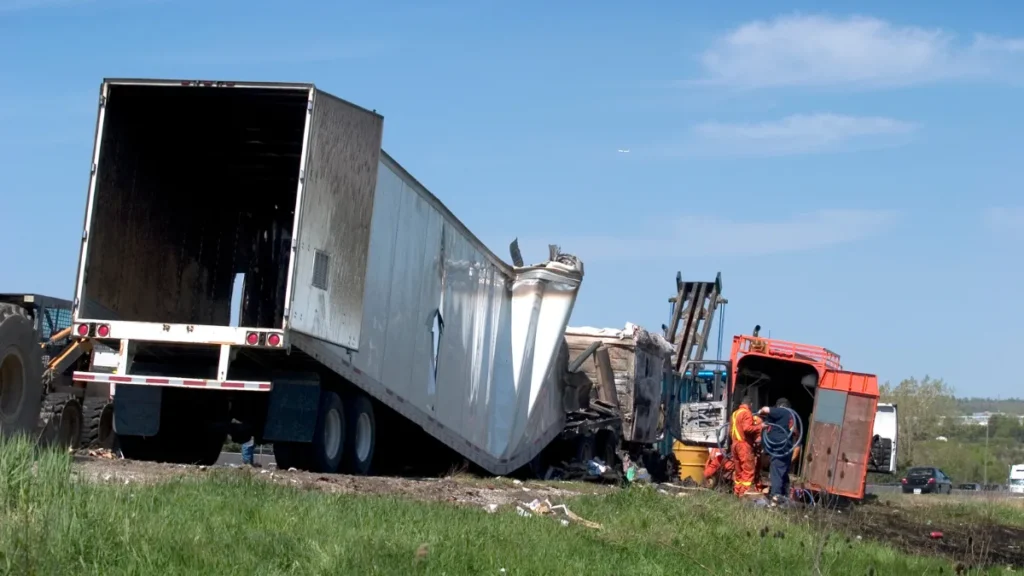
The gig trucking model can create dangerous conditions on Tennessee roads.
Common safety concerns include:
- Pressure to drive longer hours
- Fatigue due to unpaid downtime
- Less oversight and supervision
- Inconsistent safety training
- Poor maintenance responsibility
- Incentives that prioritize speed over safety
These factors increase the likelihood of serious truck accidents.
Independent Contractor vs. Employee: Why the Label Matters
Trucking companies often argue:
“The driver wasn’t our employee — we’re not responsible.”
But under Tennessee law, labels alone do not determine liability.
Courts examine the actual relationship, including:
- Who controls the driver’s work
- Who sets routes and schedules
- Who provides equipment
- Who controls safety policies
- Whether the work is integral to the business
If a company exerts significant control, it may still be legally responsible.
Misclassification of Truck Drivers
Misclassification occurs when a trucking company labels a driver as an independent contractor but treats them like an employee.
Signs of misclassification include:
- Required uniforms or branding
- Mandatory routes or dispatch instructions
- Strict performance monitoring
- Company-controlled safety rules
- Penalties for refusing loads
- Non-negotiable contracts
Misclassification can expose trucking companies to full liability after an accident.
How Gig Truckers Affect Liability in Tennessee Truck Accident Claims
1. Trucking Company Liability
Even if a driver is labeled an independent contractor, the trucking company may still be liable under:
- Vicarious liability
- Agency principles
- Negligent hiring or supervision
- Joint enterprise theories
Courts look beyond contracts to real-world conduct.
2. Freight Brokers and Logistics Companies
Gig trucking has increased the role of freight brokers.
Brokers may be liable if they:
- Knew a carrier was unsafe
- Failed to vet drivers or companies
- Exercised control over delivery schedules
- Prioritized cost over safety
Broker liability is a growing area of trucking litigation in Tennessee.
3. Owner-Operators
Some gig truckers are owner-operators.
Legal implications
- Personal insurance may be inadequate
- Maintenance responsibility may be unclear
- Multiple policies may apply
Identifying all available insurance coverage is critical.
Insurance Complications in Gig Trucking Cases
Gig trucking arrangements often involve:
- Multiple overlapping insurance policies
- Gaps in coverage
- Disputes over primary vs. excess coverage
- Attempts to deny claims entirely
Without legal intervention, victims may be told:
“There’s no coverage” — even when coverage exists.
How Trucking Companies Use Gig Status to Delay Claims
After an accident, companies often:
- Deny responsibility
- Blame the driver
- Shift fault to other parties
- Delay insurance disclosures
- Pressure victims into low settlements
These tactics are especially common in catastrophic injury cases.
How We Prove Liability in Gig Trucker Accidents
At Tennessee Accident Law, we conduct detailed investigations to uncover the truth.
Our approach includes:
- Analyzing contracts and lease agreements
- Reviewing dispatch and communication records
- Examining control over routes and schedules
- Investigating safety and training policies
- Identifying regulatory violations
- Tracing all insurance coverage
When companies hide behind contractor labels, we expose reality.
Federal Regulations Still Apply to Gig Truckers
Independent contractor status does not eliminate compliance with:
- FMCSA safety regulations
- Hours-of-Service rules
- Drug and alcohol testing
- Vehicle inspection requirements
Violations still establish negligence — regardless of employment status.
Comparative Fault in Gig Trucker Cases
Trucking companies often argue:
- The driver acted independently
- The victim caused the crash
Objective evidence such as:
- Black box data
- ELD records
- GPS tracking
- Surveillance footage
…helps defeat unfair fault-shifting.
Damages Available to Victims
Victims injured by gig truckers may recover compensation for:
- Medical expenses
- Future medical care
- Lost wages
- Loss of earning capacity
- Pain and suffering
- Permanent disability
- Wrongful death damages
Misclassification does not reduce the value of a valid claim.
Why Early Legal Action Is Essential
Gig trucking cases require fast action to:
- Preserve digital evidence
- Secure contracts and records
- Identify insurance coverage
- Prevent evidence manipulation
Delay benefits trucking companies — not victims.

Why Tennessee Accident Law Is Prepared for Gig Trucking Cases
These cases require experience, resources, and persistence.
Our firm:
- Anticipates misclassification defenses
- Identifies all liable parties
- Understands federal and state trucking law
- Prepares cases for trial
We do not allow companies to hide behind contractor labels.
What Victims Should Know
If you were injured by a truck driver labeled as an “independent contractor”:
- Do not assume the company is not liable
- Do not accept early denials
- Do not negotiate alone
Gig trucking often expands liability — it does not eliminate it.
Get Legal Help After a Gig Trucker Accident
The trucking industry may be changing — but your right to compensation remains.
Call Tennessee Accident Law at 615-212-9866
Or request your free case evaluation here:
https://tennesseeaccident.law/free-case-evaluation/
We will uncover the truth, identify all responsible parties, and fight for the compensation you deserve.
Sources
- Federal Motor Carrier Safety Administration (FMCSA) — Motor carrier responsibility and safety compliance
https://www.fmcsa.dot.gov - U.S. Department of Labor — Independent contractor classification guidance
https://www.dol.gov - American Trucking Associations (ATA) — Owner-operator and contractor industry data
https://www.trucking.org