Tennessee’s weather is as unpredictable as it is diverse. From heavy Appalachian fog to sudden Middle Tennessee thunderstorms, icy bridges, and powerful winds along open interstates, the state’s climate creates hazardous conditions for all drivers — especially those operating massive commercial trucks.
Every year, severe weather contributes to thousands of truck accidents on I-40, I-65, I-75, I-24, and rural Tennessee highways. And while truck drivers and trucking companies are required by federal law to adjust their driving behavior during adverse conditions, many fail to do so — placing innocent Tennesseans in danger.
At Tennessee Accident Law, we’ve represented countless victims whose lives were destroyed by truck accidents made worse — or caused entirely — by dangerous weather conditions and negligent driving. This article explains the biggest weather-related hazards on Tennessee roads and how victims can prove negligence even when storms or ice play a role.
If you have immediate questions, call us at (615) 212-9866 or complete our free case evaluation form now.
The Most Dangerous Weather Conditions for Truck Drivers in Tennessee
Tennessee’s unique geography — from the eastern mountains to the central valleys and western plains — leads to several distinct weather patterns that create risk for commercial trucks.
1. Heavy Rain and Hydroplaning
Tennessee sees significant rainfall year-round, especially in spring and early summer. Heavy rain reduces visibility and traction, making wet roads particularly dangerous for large trucks.
Why Rain Causes Truck Crashes
- Reduced friction leads to hydroplaning
- Longer braking distances
- Water pooling on bridges and low-lying areas
- Reduced visibility from heavy spray
Driver Responsibility
FMCSA regulations require truckers to slow down or even pull over during heavy rain. Failure to adjust speed is considered negligence — even if rain contributed to the crash.
2. Fog: Tennessee’s Invisible Threat
Fog is one of the deadliest natural hazards in the state, particularly in:
- The Cumberland Plateau
- Eastern Tennessee valleys
- Rural stretches of I-75 and I-40
- Early morning hours in Middle Tennessee
Why Fog Is Dangerous
- Rapid visibility changes
- Hidden hazards such as stopped vehicles
- Slow reaction times for large trucks
- High risk of multi-vehicle pileups
The infamous I-75 fog crash near Calhoun demonstrated how devastating fog-related truck crashes can be.
Driver Responsibility
Truck drivers must:
- Maintain extra distance
- Use low-beam headlights
- Reduce speed dramatically
- Avoid sudden braking
Failure to do so is a clear violation of safe-driving standards.
3. Ice and Black Ice
Winter brings dangerous ice, especially on:
- Bridges
- Overpasses
- Shaded rural roads
- Mountain passes
Why Ice Is Deadly
- Trucks lose traction faster than passenger cars
- Jackknife accidents become more likely
- Trailer sway or fishtailing
- Increased stopping distances
Driver Responsibility
Truckers must significantly reduce speed, use appropriate tires, and know when conditions are too dangerous to continue driving.
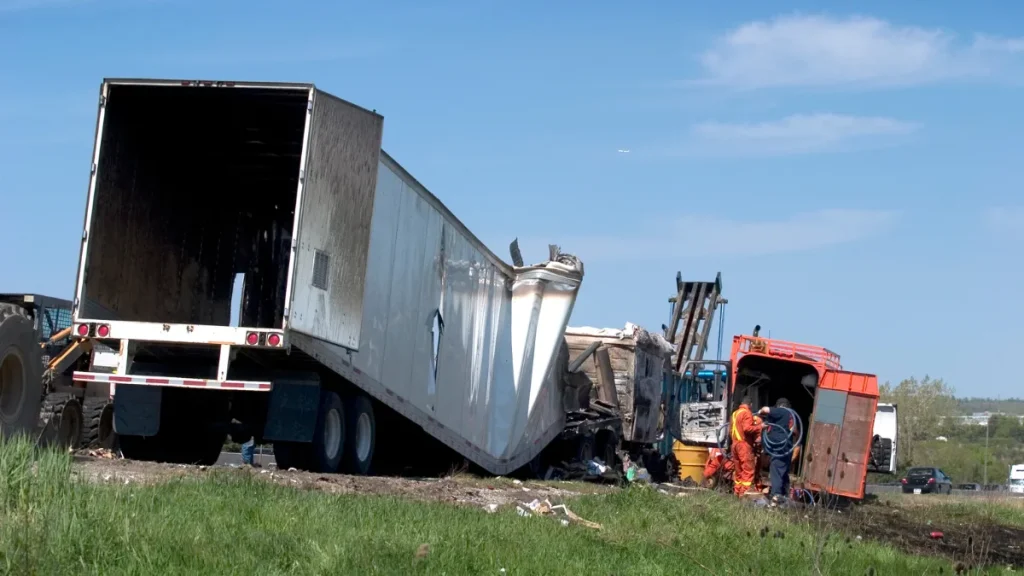
If a truck jackknifes on ice, it often means the driver was traveling too fast for conditions.
4. Snowstorms
While Tennessee doesn’t see heavy snow like northern states, even 1–2 inches can shut down major roads — and create chaos for truck drivers.
Risks Include
- Poor visibility
- Lane disappearance
- Hidden patches of ice
- Reduced road friction
Negligence in Snowy Conditions
Truckers must slow down dramatically or stop entirely. Continuing to drive at unsafe speeds in snow may be considered reckless behavior.
5. High Winds and Crosswinds
Tennessee’s wide-open interstates and elevated areas are especially vulnerable to sudden crosswinds.
Risks Include
- Trailer tipping
- Loss of lane control
- Cargo instability
- Difficulty with steering
Empty or lightly loaded trailers are particularly vulnerable to overturning in high winds.
6. Flash Floods
Flash floods frequently occur throughout Tennessee, particularly in rural areas and along river basins.
Flood-Related Truck Crash Causes
- Attempting to drive through standing water
- Roadway washouts
- Hydroplaning at high speeds
Driver Responsibility
Truck drivers must avoid flooded areas. Ignoring posted warnings or driving through standing water is negligent and dangerous.
Weather Doesn’t Excuse Negligence — It Amplifies It
While weather conditions can contribute to accidents, they do not eliminate driver or company responsibility.
Truckers are trained — and legally required — to adjust driving based on conditions. Common negligence during adverse weather includes:
Common Forms of Weather-Related Negligence
- Driving too fast for conditions
- Failing to use headlights or signals
- Following too closely
- Improper braking or jackknife-inducing maneuvers
- Ignoring weather advisories
- Failing to pull over when conditions are unsafe
Under FMCSA §392.14, drivers must exercise “extreme caution” in hazardous weather — including reducing speed or discontinuing operation.
When they don’t, and a crash occurs, victims have a strong claim for damages.
How Trucking Companies Contribute to Weather-Related Accidents
Commercial carriers often pressure drivers to stick to delivery schedules — regardless of weather conditions.
Company Negligence Includes
- Unrealistic route timing
- Incentive pay that encourages unsafe driving
- Failing to provide weather training
- Ignoring weather warnings
- Poorly maintained brakes and tires that worsen weather risk
When a company contributes to unsafe behavior, it becomes directly liable.
How Tennessee Accident Law Proves Weather-Related Negligence
These cases require aggressive investigation. We gather:
1. Black Box (ECM) Data
- Truck speed
- Brake use
- Sudden deceleration
- Driving hours before the crash
2. ELD and Driver Logs
- How long the driver had been on duty
- Violations of HOS rules
- Dispatch pressures
3. Weather Data and Radar Records
We retrieve official National Weather Service data to match conditions to driver behavior.
4. Dashcam or Surveillance Footage
Weather severity + driver speed is powerful evidence.
5. Road Hazard Reports
We compare the crash location with known hazard spots.
6. Company Records
To determine if the carrier pushed the driver to continue operating.
We build a compelling case that not only identifies negligence — but proves it unquestionably.
Who Is Liable for a Weather-Related Truck Accident?
Multiple parties may share liability, including:
- The truck driver
- The trucking company
- A third-party logistics company
- A maintenance provider
- A freight loader (if cargo played a role)
Even when weather contributes, human error is almost always a factor — and that’s where liability lies.
Damages Available to Victims
Victims of weather-related truck crashes may recover compensation for:
- Medical expenses
- Lost wages
- Pain and suffering
- Emotional distress
- Property damage
- Loss of earning capacity
- Permanent disability
- Wrongful death damages (for fatal crashes)
Tennessee law allows full compensation when negligence plays any role — even if weather contributed to the conditions.
What Tennesseans Can Do to Stay Safe
While truck drivers bear the primary legal duty, motorists can reduce risk by:
- Avoiding driving near trucks in heavy rain or fog
- Allowing extra space for braking
- Not passing trucks during extreme wind
- Slowing down around large commercial vehicles in winter weather
- Being cautious on bridges and overpasses
Defensive driving saves lives — but it won’t prevent every crash.

Take Action After a Weather-Related Truck Accident
If you or a loved one has been injured in a truck crash during rain, fog, ice, or storms in Tennessee, you may be entitled to significant compensation.
Weather may contribute to the crash — but negligence causes it.
Contact Tennessee Accident Law today for a free case evaluation or call 615-212-9866.
We will uncover the truth, prove negligence, and fight for the full compensation you deserve.
Sources
- Federal Motor Carrier Safety Administration (FMCSA) – §392.14: Hazardous Conditions
https://www.fmcsa.dot.gov - National Weather Service (NWS) – Tennessee weather hazards and climate data
https://www.weather.gov - Tennessee Department of Safety & Homeland Security – Crash and road safety data
https://www.tn.gov/safety.html