Few situations are more infuriating—or more dangerous—than being injured by a drunk driver while you’re doing your job as a professional truck driver. You follow the rules, log the miles, stay alert, and operate a massive vehicle responsibly—only to have an impaired motorist make a reckless decision that changes your life in seconds.
At Tennessee Accident Law, we represent truck drivers who were hit by drunk drivers through no fault of their own. These cases are not just about compensation—they’re about accountability. This article explains how drunk driving truck accidents happen, how fault is proven in Tennessee, what damages injured truck drivers can recover, and how to protect your claim from insurance company tactics.
If you have immediate questions, call us at (615) 212-9866 or complete our free case evaluation form now.
Drunk Driving Remains a Serious Threat on Tennessee Roads
Despite public awareness campaigns and strict DUI laws, drunk driving continues to cause thousands of crashes each year in Tennessee. Impaired drivers:
- Misjudge distance and speed
- React too slowly
- Drift between lanes
- Miss traffic signals
- Make irrational decisions
When alcohol is involved, even a small mistake can become catastrophic—especially around commercial trucks.
How Drunk Drivers Cause Crashes with Truck Drivers
Rear-End Collisions
Impaired drivers often fail to recognize slowing or stopped traffic and slam into the back of a tractor-trailer.
Wrong-Way or Lane-Departure Crashes
Alcohol impairment increases the risk of drifting into oncoming lanes or sideswiping trucks.
Intersection Violations
Drunk drivers frequently run red lights or stop signs, leading to devastating T-bone collisions.
Erratic Speed Changes
Sudden acceleration or braking leaves truck drivers no safe time to react.
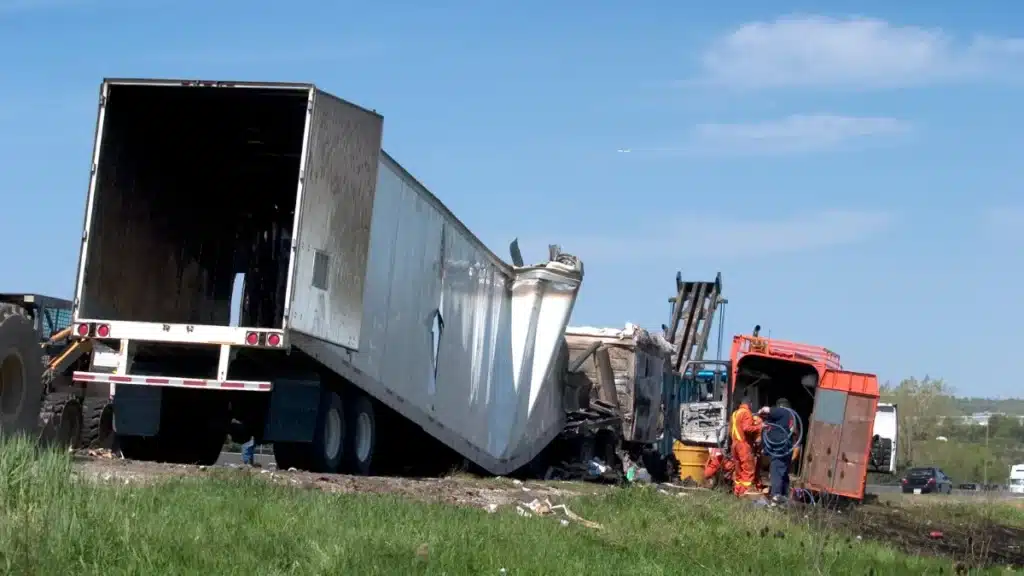
Why Drunk Driving Truck Accidents Are Especially Dangerous
Alcohol-related crashes often occur at:
- High speeds
- Late-night or early-morning hours
- Low-visibility conditions
Truck drivers injured in these crashes frequently suffer:
- Traumatic brain injuries (TBIs)
- Spinal cord injuries
- Herniated discs and nerve damage
- Internal injuries
- Fractures
- Chronic pain
- Psychological trauma and PTSD
These injuries can end a CDL career—even when the truck driver did nothing wrong.
Proving Drunk Driving in a Tennessee Truck Accident Case
Drunk driving must be supported by evidence—but DUI cases often provide strong proof.
1) DUI Arrests and Citations
Evidence may include:
- DUI arrest records
- Breathalyzer or blood test results
- Field sobriety test documentation
A DUI charge strongly supports a negligence claim.
2) Police Reports
Officers often document:
- Signs of impairment
- Admissions by the driver
- Smell of alcohol
- Erratic driving behavior
These observations matter.
3) Witness Statements
Witnesses may confirm:
- Swerving or erratic driving
- Speeding or reckless behavior
- Driver behavior immediately after the crash
4) Dash Cam and Video Footage
Video may show:
- Lane drifting
- Failure to brake
- Signal violations
- Driver behavior before impact
5) ELD and Telematics Data
Truck data can establish:
- Safe driving behavior
- Reasonable reaction times
- Absence of speeding or improper braking
This data helps keep fault where it belongs.
Tennessee DUI Laws and Civil Liability
In Tennessee:
- Driving with a blood alcohol concentration (BAC) of 0.08% or higher is illegal
- Lower BAC levels can still support impairment claims
- DUI violations may support negligence per se, strengthening civil cases
Criminal DUI charges are separate from civil injury claims—but they often make civil liability clearer.
Can Injured Truck Drivers Recover Punitive Damages?
Yes—in some drunk driving cases.
Punitive damages may be available when:
- Conduct is reckless or intentional
- The driver was heavily intoxicated
- Prior DUI offenses exist
Punitive damages are designed to punish dangerous behavior and deter future misconduct.
Workers’ Compensation vs. Third-Party Claims After a DUI Crash
If you were driving for work, workers’ compensation may provide:
- Medical care
- Partial wage replacement
However, workers’ comp does not provide:
- Pain and suffering compensation
- Full wage recovery
- Punitive damages
When a drunk driver caused the crash, you may pursue a third-party injury claim for full compensation—often alongside workers’ comp.
Tennessee Comparative Fault in Drunk Driving Cases
Insurance companies sometimes attempt to assign fault to truck drivers even in DUI cases.
Common arguments include:
- Speed
- Lane positioning
- Reaction timing
However, intoxication severely weakens these defenses. Evidence often makes fault clear.
Tennessee’s modified comparative fault rule still applies, so strong advocacy matters.
What Compensation Can Injured Truck Drivers Recover?
Depending on the case, compensation may include:
- Past and future medical expenses
- Full lost income
- Loss of future earning capacity
- Pain and suffering
- Emotional distress
- Permanent impairment
- Punitive damages (in appropriate cases)
Mistakes Truck Drivers Should Avoid After a Drunk Driving Crash
- Accepting blame or apologizing at the scene
- Giving recorded statements without legal guidance
- Delaying medical treatment
- Settling before criminal proceedings conclude
- Underestimating long-term injury impact
Drunk driving cases require careful handling.
How Tennessee Accident Law Handles Drunk Driving Truck Accident Cases
We pursue DUI-related truck accident claims aggressively:
- Immediate evidence preservation
- Coordination with criminal proceedings
- Identification of all liable parties
- Full medical and financial damage analysis
- Trial-ready case preparation
We understand the serious nature of drunk driving cases—and we treat them accordingly.

Take Action Now—Hold Drunk Drivers Accountable
If you’re a truck driver injured by a drunk driver in Tennessee, don’t let insurance companies minimize the harm or rush you into a low settlement.
Complete our free case evaluation form and call us now at 615-212-9866. We’ll review your case, explain your rights, and fight for the full compensation you deserve.
Sources
- Tennessee Highway Safety Office – Impaired Driving Data
Provides statistics and enforcement information on drunk driving in Tennessee.
https://www.tn.gov/safety/ - NHTSA – Alcohol-Impaired Driving
Explains the risks, legal standards, and crash data related to drunk driving.
https://www.nhtsa.gov/road-safety/impaired-driving - FMCSA – Large Truck Crash Causation Study
Analyzes contributing factors in crashes involving commercial vehicles and passenger cars.
https://www.fmcsa.dot.gov/safety/data-and-statistics