Being rear-ended while driving a tractor-trailer is one of the most common—and most misunderstood—truck accidents on Tennessee roads. Many people assume that if a car hits the back of a semi, fault is obvious. In practice, insurance companies often try to shift blame onto the truck driver by claiming sudden stops, brake issues, or “unsafe following distance” by the rig.
At Tennessee Accident Law, we represent truck drivers who were rear-ended through no fault of their own and then pressured by insurers to accept blame or low settlements. This article explains how fault is actually determined in rear-end truck crashes, the evidence that proves liability, and how injured truck drivers can protect the full value of their claims.
If you have immediate questions, call us at (615) 212-9866 or complete our free case evaluation form now.
Why Rear-End Truck Accidents Are So Dangerous
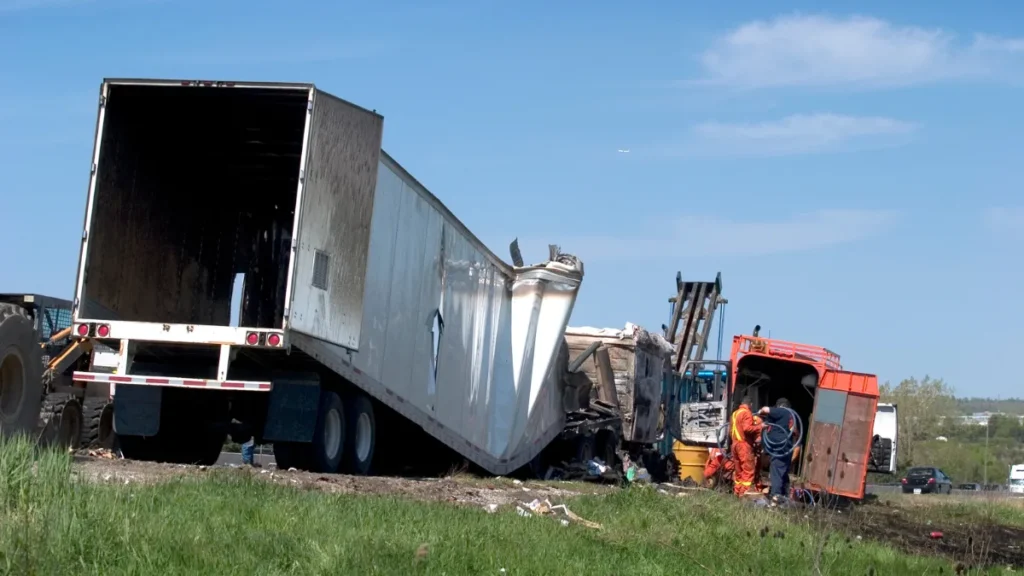
Passenger vehicles simply do not provide the protection a commercial rig does. When a car strikes the rear of a tractor-trailer, the force transfer often results in severe injuries for both drivers, including:
- Neck and back injuries (herniated discs, nerve damage)
- Traumatic brain injuries from whiplash forces
- Shoulder, knee, and hip injuries from bracing
- Spinal cord trauma in high-speed impacts
- Chronic pain that interferes with long-haul or even local driving
For truck drivers, even a “moderate” rear-end collision can end a career if injuries prevent climbing, coupling, loading, or sitting for extended hours.
Is the Rear Driver Always at Fault in Tennessee?
In most cases, yes—but insurance companies don’t like “most cases.”
The General Rule
Under Tennessee law and standard traffic safety principles, the rear driver is presumed at fault because drivers are required to:
- Maintain a safe following distance
- Control speed based on traffic conditions
- Anticipate normal traffic flow
If a passenger vehicle rear-ends your truck, that presumption typically works in your favor.
How Insurers Try to Overcome the Presumption
Insurance companies may argue:
- You stopped suddenly without warning
- Your brake lights were not functioning
- You were driving too slowly for traffic conditions
- Mechanical failure caused unexpected deceleration
- Weather conditions should reduce their driver’s responsibility
These arguments are common—and often unsupported by evidence.
Evidence That Proves Fault in Rear-End Truck Accidents
Winning a rear-end truck accident claim depends on objective proof, not opinions.
1) Vehicle Damage Patterns
Damage location and severity can show:
- Impact speed
- Angle of collision
- Whether braking occurred
- Whether the striking driver failed to slow at all
Rear-end damage analysis often supports the truck driver’s account when properly documented.
2) Dash Cam and Video Evidence
Dash cam footage is frequently the strongest evidence in rear-end cases. It can show:
- Following distance
- Erratic driving by the rear vehicle
- Distracted behavior (swerving, delayed braking)
- Traffic flow and weather conditions
Nearby traffic cameras, business cameras, and other motorists’ dash cams may also capture the impact.
3) ELD and Telematics Data
Electronic logging devices and telematics can establish:
- Speed at impact
- Brake application timing
- Throttle position
- Sudden deceleration events
This data often disproves claims that a truck driver stopped “without reason.”
4) Police Reports and Citations
While police reports are not always perfect, they often include:
- Citations for following too closely
- Speed-related violations
- Statements from the at-fault driver
- Independent witness observations
Even if the report is incomplete, it can support further investigation.
5) Witness Statements
Independent witnesses—especially other drivers—carry significant weight. Their testimony can confirm:
- Traffic flow
- Whether your truck was operating normally
- Erratic or aggressive driving by the rear vehicle
Common Scenarios Where Cars Rear-End Trucks
Distracted Driving
Texting, GPS use, and in-car screens are leading causes of rear-end crashes. Distraction evidence may include:
- Phone records
- App usage data
- Witness observations
Speeding or Aggressive Driving
Passenger vehicles often underestimate stopping distances near large trucks, especially at highway speeds.
Fatigue or Impairment
Drowsy or impaired drivers react slower and misjudge closing distances—often with catastrophic results.
Weather Misjudgment
Rain or fog does not excuse negligence. Drivers are required to adjust speed and following distance for conditions.
What If the Insurance Company Claims You “Stopped Suddenly”?
Sudden stops are not negligence when they are:
- Required by traffic conditions
- Caused by vehicles ahead braking
- Necessary to avoid a hazard or collision
Tennessee recognizes the sudden emergency doctrine, which protects drivers who react reasonably to unexpected conditions.
Data evidence often shows that truck drivers brake gradually and predictably, contrary to insurer claims.
Injuries Truck Drivers Commonly Suffer in Rear-End Collisions
Even when the impact is from behind, truck drivers can suffer serious injuries, including:
- Cervical and lumbar disc injuries
- Facet joint damage
- Nerve impingement
- Soft tissue injuries that become chronic
- Concussions without direct head impact
Insurers often downplay these injuries. Medical documentation—and consistency—matters.
Workers’ Comp vs. Third-Party Claims in Rear-End Crashes
If you were driving for work, workers’ compensation may cover:
- Medical treatment
- A portion of lost wages
However, when a passenger vehicle caused the crash, you may also pursue a third-party injury claim against:
- The at-fault driver
- Their employer (if applicable)
- Other responsible parties
A third-party claim allows recovery for:
- Pain and suffering
- Full lost income
- Future earning capacity
- Long-term medical care
These claims often run simultaneously, and coordination is essential.
Tennessee Comparative Fault: Why Insurers Try to Shift Blame
Tennessee follows a modified comparative fault rule:
- You can recover damages if you are less than 50% at fault
- Your recovery is reduced by your percentage of fault
Even a small shift in fault can significantly reduce compensation. That’s why insurers scrutinize:
- Logbooks
- Maintenance records
- Prior injuries
- Statements made immediately after the crash
Strong evidence protects against unfair fault assignments.
Mistakes Injured Truck Drivers Should Avoid After a Rear-End Crash
- Giving recorded statements without legal guidance
- Saying “I’m fine” before medical evaluation
- Delaying treatment
- Posting about the crash on social media
- Accepting quick settlements
- Failing to preserve electronic data
Each of these mistakes can weaken an otherwise strong case.

How Tennessee Accident Law Builds Rear-End Truck Accident Cases
We approach rear-end truck crashes with a litigation-ready mindset:
- Immediate evidence preservation
- Data and video analysis
- Identification of all insurance policies
- Medical causation development
- Expert consultation when necessary
- Aggressive negotiation backed by trial preparation
We understand trucking operations and the realities CDL drivers face after injury.
Take Action Now to Protect Your Claim
If you were rear-ended while driving your truck in Tennessee—and the crash was not your fault—do not let an insurance company rewrite the facts or minimize your injuries.
Complete our free case evaluation form and call us now at 615-212-9866. We’ll review your case, explain your rights, and help you pursue the full compensation you deserve.
Sources
- Tennessee Department of Safety & Homeland Security – Traffic Crash Information
Provides guidance on crash reporting and fault considerations under Tennessee traffic law.
https://www.tn.gov/safety/ - FMCSA – Large Truck Crash Causation Study
Examines contributing factors in crashes involving commercial vehicles, including following distance and driver behavior.
https://www.fmcsa.dot.gov/safety/data-and-statistics - NHTSA – Rear-End Crash Prevention and Driver Responsibility
Explains how following distance, distraction, and speed contribute to rear-end collisions.
https://www.nhtsa.gov/road-safety