A jackknife accident is one of the most terrifying events a truck driver can experience. In seconds, your trailer swings out, control is lost, and the crash unfolds—often because another driver made a reckless or negligent move that left you with no safe option.
Despite this reality, insurance companies frequently try to pin jackknife crashes on the truck driver, claiming “speed,” “overcorrection,” or “loss of control.” At Tennessee Accident Law, we know the truth: many jackknife accidents are caused by passenger vehicles, not professional CDL drivers.
This article explains how jackknife crashes really happen, how fault is proven when another driver causes the wreck, and what injured truck drivers in Tennessee can do to protect their rights and compensation.
If you have immediate questions, call us at (615) 212-9866 or complete our free case evaluation form now.
What Is a Jackknife Accident?
A jackknife accident occurs when the trailer of a tractor-trailer swings out at an angle, forming a “V” or “L” shape with the cab. These crashes often result in:
- Multi-lane roadway blockages
- Secondary collisions
- Severe injuries
- Extensive property damage
Jackknife accidents are not random. They are usually triggered by sudden, external forces—often caused by other motorists.
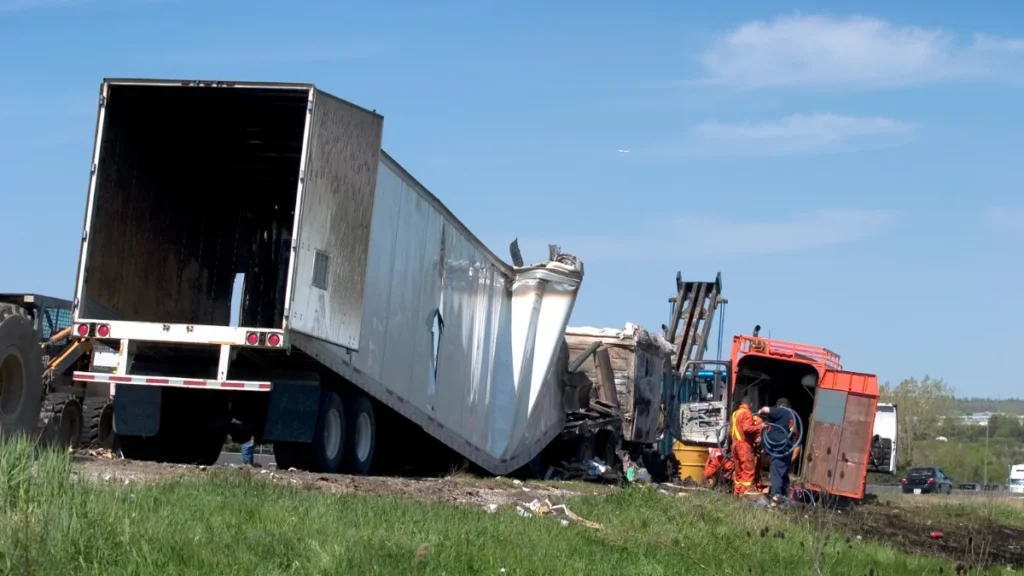
The Truth About Jackknife Accidents: Truck Drivers Are Often Not at Fault
Insurance companies like to suggest jackknife crashes only happen due to:
- Speeding
- Improper braking
- Driver error
But real-world crash investigations tell a different story.
Common Third-Party Causes of Jackknife Crashes
Passenger vehicle negligence frequently creates unavoidable jackknife situations, including:
Sudden Cut-Ins
A car cuts sharply in front of a truck, forcing emergency braking. The trailer loses traction and swings.
Brake-Checking
Intentional or reckless brake-checking gives a truck driver no stopping distance—especially at highway speeds.
Unsafe Lane Changes
Vehicles merging too closely into a truck’s stopping zone disrupt braking balance.
Rear-End Impacts
A car striking the trailer or tractor can destabilize the rig instantly.
Loss-of-Control by Another Vehicle
A car spins, hydroplanes, or swerves into the truck’s path, forcing evasive action.
In each of these scenarios, the truck driver’s reaction is reasonable, even if the outcome is catastrophic.
Why Jackknife Accidents Are So Dangerous for Truck Drivers
Jackknife crashes often involve violent deceleration, rotational forces, and secondary impacts. Truck drivers commonly suffer:
- Herniated or ruptured spinal discs
- Neck and lower back injuries
- Traumatic brain injuries (TBIs)
- Shoulder and knee injuries from bracing
- Spinal cord damage
- Chronic nerve pain
- Psychological trauma, including PTSD
These injuries can end or severely limit a driving career.
How Fault Is Determined in a Tennessee Jackknife Accident
Fault is not based on assumptions—it’s based on evidence.
Key Evidence That Proves Another Driver Caused the Jackknife
1) Dash Cam Footage
Dash cams often capture:
- Cut-offs
- Sudden braking by passenger vehicles
- Erratic lane changes
- Traffic flow before the jackknife
This footage is often the most powerful evidence in a jackknife case.
2) ELD and Telematics Data
Electronic data can show:
- Speed before braking
- Brake application timing
- Steering input
- Sudden deceleration events
This data frequently disproves claims that the truck driver was speeding or reckless.
3) Accident Reconstruction
Professional reconstruction experts analyze:
- Skid marks
- Yaw marks
- Vehicle damage
- Final resting positions
These analyses often confirm that the jackknife was unavoidable once another driver created the emergency.
4) Witness Statements
Other motorists may confirm:
- The passenger vehicle cut off the truck
- Sudden braking occurred
- The truck driver had no safe escape route
Independent witnesses carry significant weight.
5) Police Reports and Citations
While not determinative, police reports may include:
- Citations for unsafe lane changes
- Statements from the at-fault driver
- Scene observations consistent with a cut-off or brake-check
Weather vs. Negligence: A Common Insurance Defense
Insurance companies often argue that weather—not another driver—caused the jackknife.
Here’s the legal reality:
- Weather does not excuse negligent driving
- Drivers must adjust speed and behavior to conditions
- Cutting off a truck in rain, fog, or snow is still negligence
If another driver created the emergency, they can still be liable—even in poor weather.
Tennessee’s Sudden Emergency Doctrine Protects Truck Drivers
Tennessee recognizes the sudden emergency doctrine, which applies when:
- A driver is confronted with a sudden, unexpected danger
- The driver did not create the emergency
- The response was reasonable under the circumstances
Jackknife accidents caused by cut-offs, brake-checking, or unexpected vehicle behavior often fall squarely under this doctrine.
Workers’ Compensation vs. Third-Party Claims After a Jackknife Crash
If you were driving for work, workers’ compensation may cover:
- Medical care
- Partial lost wages
But workers’ comp does not provide full compensation.
When another driver caused the jackknife, you may also pursue a third-party injury claim, which can include:
- Pain and suffering
- Full lost income
- Future earning capacity
- Permanent impairment
- Long-term medical needs
These claims often run at the same time, and coordination is critical to maximize recovery.
Tennessee Comparative Fault: Why Insurers Try to Blame Truck Drivers
Tennessee follows a modified comparative fault rule:
- You may recover damages if you are less than 50% at fault
- Your compensation is reduced by your percentage of fault
Insurance companies aggressively try to assign fault to truck drivers in jackknife cases because even small percentages reduce payouts. Evidence-driven advocacy is essential.
Common Mistakes Injured Truck Drivers Make After a Jackknife Crash
Avoid these costly errors:
- Giving recorded statements without legal guidance
- Delaying medical treatment
- Allowing data to be overwritten or destroyed
- Accepting fault assumptions without investigation
- Settling before understanding long-term injury impact
Jackknife cases require early, decisive action.

How Tennessee Accident Law Builds Strong Jackknife Accident Cases
We approach jackknife truck accident cases with a trial-ready mindset:
- Immediate preservation of dash cam, ELD, and ECM data
- Independent accident reconstruction
- Full medical documentation and causation analysis
- Identification of all liable parties and insurance coverage
- Aggressive negotiation backed by litigation preparation
We understand trucking physics, CDL standards, and the realities of emergency driving situations.
Take Action Now—Before the Narrative Is Set
If you were injured in a jackknife crash in Tennessee caused by another driver, do not let insurance companies automatically blame you.
Complete our free case evaluation form and call us now at 615-212-9866. We will review your case, explain your options, and fight to protect the compensation you deserve.
Sources
- FMCSA – Large Truck Crash Causation Study
Analyzes contributing factors in truck crashes, including actions of other vehicles.
https://www.fmcsa.dot.gov/safety/data-and-statistics - NHTSA – Commercial Vehicle Safety and Crash Dynamics
Provides insight into crash mechanics and driver response in emergency situations.
https://www.nhtsa.gov/road-safety - Tennessee Department of Safety & Homeland Security
Offers information on crash reporting and traffic safety enforcement in Tennessee.
https://www.tn.gov/safety/