Police reports play a critical role in Tennessee truck accident cases. When a commercial truck collides with a passenger vehicle, law enforcement becomes one of the first entities to document the scene, interview witnesses, and assess fault. For victims seeking justice, a well-detailed police report can be a powerful piece of early evidence — but it is not the final word on liability.
At Tennessee Accident Law, we use police reports as a foundational tool in building strong truck accident claims, but we also know their limitations. Understanding how these reports influence your case can help you avoid common pitfalls and ensure you receive full compensation for your injuries.
If you have immediate questions, call us at (615) 212-9866 or complete our free case evaluation form now.
Why Police Reports Matter in Tennessee Truck Accident Cases
1. Police Reports Provide an Official Record of the Crash
A police report includes:
- Date, time, and location of the crash
- The officers involved
- Weather and road conditions
- Initial statements from drivers and witnesses
- Vehicle positions
- Observed injuries
- Citations issued
This documentation creates an authoritative baseline for the accident.
2. They Capture Early Evidence That May Disappear Later
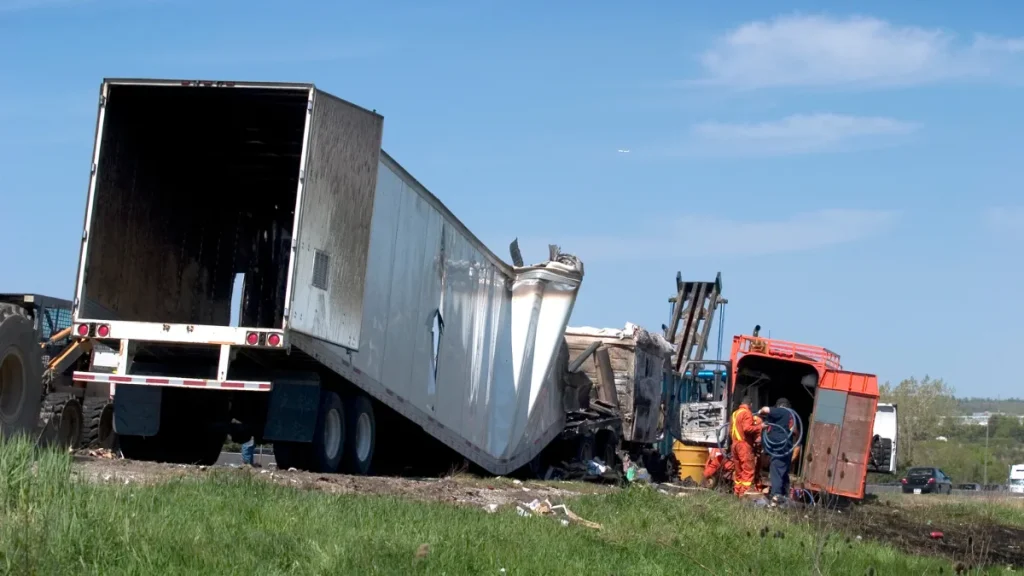
Police officers photograph:
- Skid marks
- Debris fields
- Vehicle damage
- Traffic signal positions
- Road hazards
This evidence is often lost within hours due to cleanup crews, weather, or traffic — making the report invaluable.
3. Officers Often Note Unsafe Behaviors
Police may document:
- Speeding
- Improper lane changes
- Tailgating
- Failure to yield
- Distracted driving
- Driver fatigue indicators
When a truck driver exhibits these behaviors, they serve as strong initial clues of negligence.
4. Citations Strengthen Liability Arguments
If officers issue a citation to the truck driver (or the trucking company), it can significantly influence your claim.
Common citations include:
- Failure to maintain lane
- Following too closely
- Speeding
- Reckless driving
- Commercial vehicle safety violations
These citations support arguments of negligence or recklessness.
5. Police Reports Help Establish the Chain of Events
Insurance companies frequently dispute how a crash occurred.
The police report offers an unbiased timeline of:
- Impact points
- Driver actions
- Traffic conditions
- Contributing factors
This can shut down attempts to rewrite the narrative later.
The Limitations of Police Reports
While police reports are valuable, they are not perfect and do not determine fault legally.
1. Officers Usually Arrive After the Crash
Police officers reconstruct the accident based on:
- Driver statements
- Witness accounts
- Physical evidence
But they were not there when the crash occurred, meaning their conclusions may be incomplete or incorrect.
2. Officers Are Not Federal Trucking Experts
Truck crashes involve:
- FMCSA regulations
- Electronic logging devices (ELDs)
- Black box data (ECM)
- Hours-of-Service violations
- Maintenance records
Police do not typically investigate these deeper layers — but we do.
3. Reports Can Contain Errors
Common issues include:
- Incorrect driver information
- Misinterpreted statements
- Wrong vehicle positions
- Missing witnesses
These mistakes can hurt your case if not corrected.
4. The Police Report Is Not Admissible as Evidence of Fault in Court
Under Tennessee law, police opinions on fault are usually not admissible in trial.
However, certain portions may still be used strategically.
How Tennessee Accident Law Uses Police Reports in Your Case
1. Verify Facts and Identify Evidence Gaps
We review the report to determine:
- Whether statements are accurate
- Whether evidence was missing or overlooked
- Which experts should be involved
This helps us build the foundation of your case.
2. Identify Additional Evidence Sources
Based on the report, we may obtain:
- Dashcam footage
- 911 audio
- Traffic camera recordings
- Business surveillance videos
- Witness testimonies
Often, these become far more important than the report itself.
3. Investigate Federal Violations
Police reports rarely include:
- Logbook violations
- Hours-of-Service breaches
- Maintenance failures
- Cargo misloading
- Past violations of the trucking company
We uncover these during our investigation — and they often determine liability.
4. Correct Mistakes in the Report
If the police report contains inaccuracies, we help clients:
- File a supplemental statement
- Provide additional evidence
- Request corrections
This prevents insurers from using errors to deny your claim.
5. Use the Report Strategically in Negotiations
Although the report may not decide fault in court, insurers place heavy weight on:
- Citations
- Statements
- Observations
- Diagrammed crash layouts
We use these details to pressure insurance companies into fair settlements.
How Police Reports Affect Insurance Company Tactics
Insurance companies often use police reports to:
- Blame the victim
- Downplay injuries
- Minimize liability
- Deny claims early
However, reports rarely include full context — which is why we dig deeper.
Insurers may argue:
- “The report doesn’t show the trucker was negligent.”
- “Witnesses didn’t mention fatigue or distraction.”
- “No citation means no fault.”
These statements are misleading. Police reports do not replace a full investigation — they are simply one piece of evidence.
What You Should Do If Your Police Report Is Wrong
If the report contains errors:
- Do not panic.
- Do not argue with the insurance company.
- Contact us immediately.
We gather evidence that overrides incorrect assumptions in the report.
How Police Reports Help in Litigation
During lawsuits, police reports help:
- Refresh witness recollections
- Support accident reconstruction
- Strengthen expert testimony
- Identify inconsistencies in the trucking company’s version
They provide a roadmap for the legal strategy, even if certain portions are not admissible.
The Most Important Step: Contact an Attorney Quickly
Police departments often release reports within 3–10 days.
By contacting us early, we can:
- Preserve evidence
- Contact witnesses
- Obtain surveillance footage before it is deleted
- Prevent the trucking company from altering the narrative
In Tennessee truck accident cases, time is everything.

Get the Answers and Support You Need After a Truck Accident
Police reports matter — but they are only the beginning.
You deserve a legal team that will go far beyond the surface and uncover the full truth.
Call Tennessee Accident Law at 615-212-9866
Or request a free case evaluation now:
https://tennesseeaccident.law/free-case-evaluation/
We will examine your police report, investigate thoroughly, and fight for every dollar you deserve.
Sources
- Tennessee Department of Safety & Homeland Security — Crash reporting guidelines
https://www.tn.gov/safety - Federal Motor Carrier Safety Administration (FMCSA) — Regulations involving commercial drivers
https://www.fmcsa.dot.gov - National Highway Traffic Safety Administration (NHTSA) — Crash reporting and investigation resources
https://www.nhtsa.gov