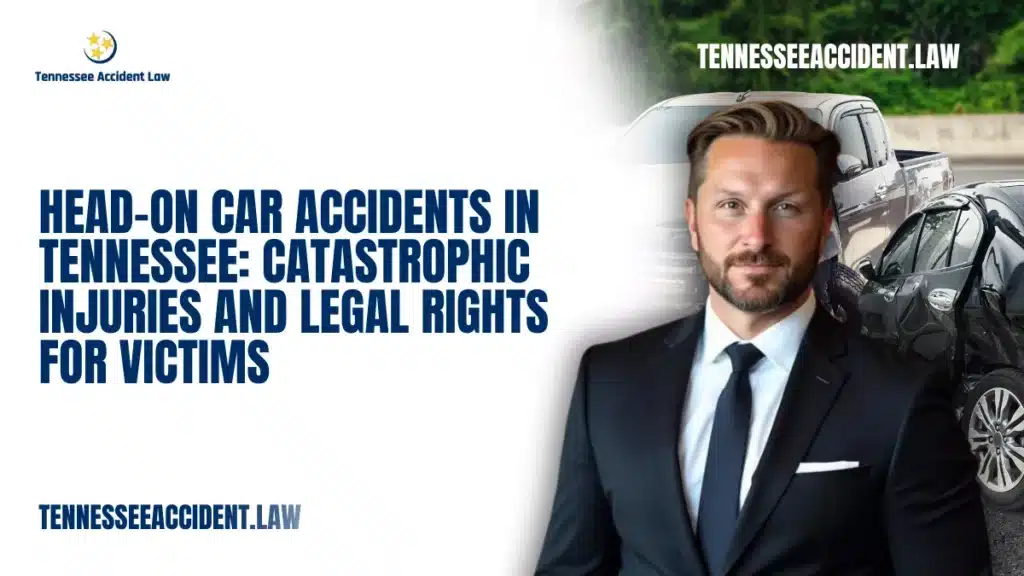
Head-on collisions are among the most deadly types of car accidents on Tennessee roadways. When two vehicles traveling in opposite directions collide, the combined force of impact can cause devastating injuries or fatalities. These crashes often occur at high speeds on rural highways, two-lane roads, and interstates throughout Tennessee.
At Tennessee Accident Law, we represent victims who have suffered life-changing injuries in head-on collisions. These crashes are frequently the result of driver negligence, and our firm works aggressively to hold responsible drivers accountable while pursuing full compensation for our clients.
If you have immediate questions, call us at (615) 212-9866 or complete our free case evaluation form now.
Why Head-On Collisions Are So Dangerous
Head-on crashes involve the full forward momentum of two vehicles colliding at once. Even when each vehicle is traveling at moderate speeds, the combined impact can equal a crash at extremely high speed.
Head-on accidents are particularly dangerous because:
- Both vehicles absorb the force of impact
- Drivers and passengers have little time to react
- Airbags and seatbelts may not fully prevent severe injuries
- Vehicles may spin or roll after the initial collision
These crashes often lead to catastrophic injuries and long-term medical complications.
Common Causes of Head-On Car Accidents in Tennessee
Most head-on collisions are preventable and occur due to driver negligence or unsafe driving behavior.
Distracted Driving
Drivers who look at their phones, adjust navigation systems, or become distracted may drift into oncoming traffic.
Impaired Driving
Alcohol or drug impairment significantly increases the risk of crossing center lines or driving the wrong way.
Fatigue
Drowsy drivers may fall asleep or lose awareness of their lane position.
Improper Passing
Attempting to pass another vehicle on a two-lane road without sufficient visibility often leads to head-on collisions.
Wrong-Way Driving
Entering highways or ramps incorrectly can lead to high-speed head-on crashes.

Injuries Commonly Caused by Head-On Collisions
Because of the severe forces involved, head-on crashes often result in catastrophic injuries.
Traumatic Brain Injuries
Victims may suffer concussions, brain contusions, or permanent cognitive impairment.
Spinal Cord Injuries
These crashes can lead to paralysis or permanent mobility limitations.
Internal Organ Damage
Blunt-force trauma may cause internal bleeding and life-threatening complications.
Multiple Broken Bones
High-impact collisions often result in fractures of the arms, legs, ribs, and pelvis.
Where Head-On Collisions Commonly Occur in Tennessee
Head-on crashes frequently occur on:
- Rural highways and two-lane roads
- Mountain or winding roads
- Undivided state highways
- Construction zones with lane shifts
- Interstate ramps and wrong-way entry points
Many of these accidents occur in areas without physical barriers separating opposing lanes.
Who Can Be Held Liable in a Head-On Accident?
Liability for head-on collisions typically falls on the driver who crossed into oncoming traffic. However, other parties may also be responsible.
Negligent Drivers
Drivers who were distracted, impaired, fatigued, or reckless may be held accountable.
Vehicle Manufacturers
Defective steering systems, brakes, or other components may contribute to loss of control.
Government Entities
Poor roadway design, missing signage, or unsafe road conditions may play a role in some crashes.
A thorough investigation helps determine all responsible parties.
Compensation Available to Head-On Accident Victims
Victims injured in head-on car accidents may be entitled to compensation for:
- Medical expenses and future treatment
- Rehabilitation and therapy
- Lost wages and diminished earning capacity
- Pain and suffering
- Emotional distress
- Permanent disability
- Wrongful death damages for surviving families
Serious head-on collisions often involve significant financial damages due to the severity of injuries.
Why Insurance Companies Dispute Head-On Collision Claims
Insurance companies often attempt to reduce their liability by:
- Disputing fault or claiming shared responsibility
- Minimizing the severity of injuries
- Questioning medical treatment
- Offering early settlement offers that undervalue claims
At Tennessee Accident Law, we aggressively challenge these tactics and pursue full compensation for our clients.

How Tennessee Accident Law Helps Car Accident Victims
Our firm has decades of experience representing serious accident victims throughout Tennessee. When you work with us, we:
- Conduct thorough accident investigations
- Work with medical and accident reconstruction experts
- Handle all insurance negotiations
- Prepare cases for trial if necessary
- Charge no fees unless we recover compensation
We represent only injured victims and their families.
Speak With a Tennessee Car Accident Lawyer Today
If you or a loved one was injured in a head-on car accident in Tennessee, you deserve experienced legal representation and strong advocacy.
Contact Tennessee Accident Law today by completing our free case evaluation form or calling 615-212-9866 to speak with an experienced Tennessee car accident lawyer.
Frequently Asked Questions About Head-On Car Accidents in Tennessee
1. What is considered a head-on collision?
A head-on collision occurs when two vehicles traveling in opposite directions crash front-to-front. These accidents often happen when one driver crosses the center line or enters the wrong lane of traffic. Because both vehicles are moving toward each other, the impact forces are extremely high, which makes these crashes particularly dangerous.
2. What causes most head-on accidents in Tennessee?
Head-on collisions are most often caused by driver negligence. Common causes include:
- Distracted driving
- Drunk or drug-impaired driving
- Driver fatigue
- Unsafe passing on two-lane roads
- Wrong-way driving on highways
- Speeding or reckless driving
Many of these accidents could be prevented if drivers followed basic traffic safety rules.
3. Are head-on collisions more likely to cause serious injuries?
Yes. Head-on crashes are among the most severe types of car accidents because both vehicles’ speeds combine at the moment of impact. This often leads to catastrophic injuries such as traumatic brain injuries, spinal cord damage, internal bleeding, and multiple fractures.
4. Who is usually at fault in a head-on collision?
In many cases, the driver who crossed the center line or entered the wrong lane is responsible for the crash. However, determining liability may require a detailed investigation involving police reports, witness statements, accident reconstruction, and roadway evidence.
5. What compensation can victims recover after a head-on accident?
Victims of head-on collisions may be entitled to compensation for:
- Medical expenses and future treatment
- Lost wages and reduced earning capacity
- Pain and suffering
- Emotional distress
- Rehabilitation costs
- Permanent disability
In fatal accidents, surviving family members may also pursue wrongful death compensation.
6. What should I do immediately after a head-on car accident?
If you are involved in a head-on crash, you should:
- Call 911 immediately
- Seek medical attention as soon as possible
- Document the accident scene if it is safe
- Avoid discussing fault at the scene
- Contact an experienced Tennessee car accident lawyer
Prompt action helps preserve evidence that may be critical to your claim.
7. How long do I have to file a car accident lawsuit in Tennessee?
Tennessee generally has a one-year statute of limitations for personal injury claims related to car accidents. This means victims usually have one year from the date of the accident to file a lawsuit. Because this is a short timeframe, it is important to speak with an attorney as soon as possible.
8. Why should I speak with a lawyer after a head-on collision?
Head-on accident cases often involve serious injuries and significant financial damages. Insurance companies may attempt to minimize or deny claims. An experienced attorney can investigate the accident, gather evidence, negotiate with insurers, and pursue maximum compensation on your behalf.
Sources
- National Highway Traffic Safety Administration (NHTSA) – Data on head-on collisions and fatal crash statistics.
https://www.nhtsa.gov - Tennessee Department of Safety and Homeland Security – Tennessee crash data and roadway safety information.
https://www.tn.gov/safety - Insurance Institute for Highway Safety (IIHS) – Research on collision types and injury severity.
https://www.iihs.org