Tennessee truck drivers spend thousands of hours on the road each year. When highways, interstates, or local roads are poorly designed, improperly maintained, or dangerously marked, even the most careful driver can be put in an impossible situation. Potholes, missing signage, unsafe curves, inadequate drainage, and poorly managed construction zones can all cause serious crashes—often through no fault of the truck driver.
At Tennessee Accident Law, we represent truck drivers injured in accidents caused by hazardous road conditions. These cases are more complex than typical crashes because they may involve government liability, special notice rules, and strict deadlines. This article explains when a truck driver can sue the state or local government in Tennessee, how these claims work, and what steps you must take to protect your right to compensation.
If you have immediate questions, call us at (615) 212-9866 or complete our free case evaluation form now.
What Are “Hazardous Road Conditions”?
Hazardous road conditions are dangers that make a roadway unreasonably unsafe for normal travel. These hazards go beyond ordinary imperfections and often involve negligent maintenance or design.
Common Hazardous Road Conditions Affecting Truck Drivers
- Large or unrepaired potholes
- Uneven pavement or sudden drop-offs
- Poorly banked or designed curves
- Missing or obscured warning signs
- Inadequate lighting
- Standing water due to poor drainage
- Ice-prone bridges without warnings
- Faded lane markings
- Improperly managed work zones
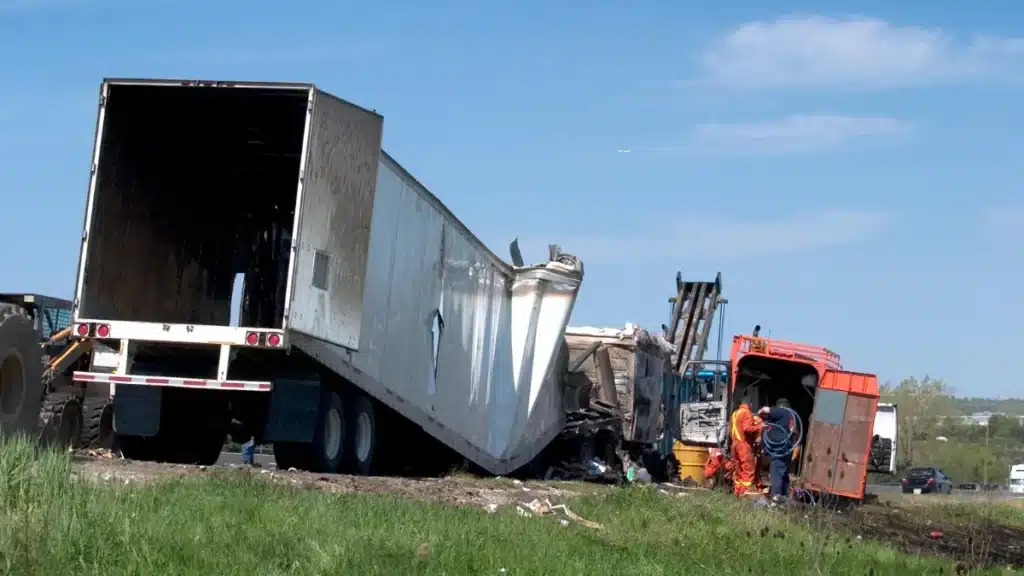
For tractor-trailers, these hazards can cause loss of control, jackknifes, rollovers, or violent evasive maneuvers.
Why Hazardous Roads Are Especially Dangerous for Trucks
Commercial trucks:
- Have higher centers of gravity
- Require longer stopping distances
- Are more sensitive to surface changes
- Are harder to maneuver in emergencies
What might be a “minor” road defect for a passenger car can be catastrophic for a fully loaded semi.
Who Is Responsible for Maintaining Tennessee Roads?
Responsibility depends on who controls the road where the crash occurred.
Potentially Responsible Government Entities
- Tennessee Department of Transportation (TDOT) – state highways and interstates
- Counties – county roads and bridges
- Cities or municipalities – local streets
- Government contractors – maintenance or construction companies
Identifying the correct entity is critical—and mistakes can cost you your claim.
Can You Sue the State of Tennessee After a Truck Accident?
Yes—but only under specific conditions.
Tennessee has sovereign immunity, meaning the state cannot be sued unless it allows it. The Tennessee Governmental Tort Liability Act (GTLA) creates limited exceptions where injured people—including truck drivers—can bring claims against government entities.
When Government Liability May Apply
You may have a claim if the government:
- Knew or should have known about a dangerous condition
- Failed to repair it within a reasonable time
- Failed to warn drivers of the hazard
- Created the dangerous condition through poor design or maintenance
Examples include:
- A pothole reported multiple times but left unrepaired
- Missing warning signs on a sharp curve
- Poor drainage causing repeated hydroplaning crashes
- Inadequate signage in a state-managed work zone
Notice Is a Critical Issue in These Cases
Government liability often depends on notice.
Actual Notice
The government knew about the hazard through:
- Prior complaints
- Inspection reports
- Previous crashes
Constructive Notice
The hazard existed long enough that the government should have known about it through reasonable inspections.
Proving notice is one of the most important—and challenging—parts of these cases.
Strict Deadlines and Special Rules Apply
Claims against government entities are not like regular injury claims.
Key differences include:
- Shorter filing deadlines
- Strict notice requirements
- Damage caps on compensation
- No punitive damages against the government
Missing a deadline—even by a day—can permanently bar your claim.
How Fault Is Proven in Hazardous Road Condition Truck Accidents
These cases require a detailed investigation.
1) Scene Documentation
Photos and video showing:
- The hazard itself
- Lack of warnings
- Road layout and visibility
- Weather conditions
Early documentation is critical—hazards are often repaired after crashes.
2) Maintenance and Inspection Records
Government records may show:
- How long the hazard existed
- Whether inspections were missed
- Prior complaints or reports
These records often prove notice and negligence.
3) Prior Crash History
Evidence of previous crashes at the same location strongly supports liability.
4) Engineering and Road Design Analysis
Experts may analyze:
- Road geometry
- Drainage systems
- Curve design
- Compliance with safety standards
5) Accident Reconstruction
Reconstruction helps show:
- The crash was unavoidable
- The hazard caused or contributed to the accident
- The truck driver acted reasonably
Injuries Truck Drivers Commonly Suffer Due to Road Hazards
Hazard-related crashes often cause:
- Traumatic brain injuries (TBIs)
- Neck and back injuries
- Herniated discs
- Spinal cord injuries
- Orthopedic injuries
- Chronic pain
- Permanent disability
These injuries can end a trucking career.
Workers’ Compensation vs. Government Liability Claims
If you were driving for work:
- Workers’ compensation may cover medical bills and partial wages
However, workers’ comp does not cover:
- Pain and suffering
- Full lost income
- Long-term earning loss
A government liability claim may be necessary for full compensation—and both claims may proceed together.
Tennessee Comparative Fault and Road Condition Cases
Government defendants often argue:
- The driver should have slowed down
- The hazard was “open and obvious”
- Weather—not the road—caused the crash
Tennessee’s modified comparative fault rule makes evidence essential to prevent unfair blame shifting.
Common Mistakes Truck Drivers Make After Road Hazard Accidents
- Failing to photograph the hazard
- Assuming the state “can’t be sued”
- Waiting too long to act
- Giving statements without legal guidance
- Missing notice deadlines
These mistakes can eliminate otherwise valid claims.
How Tennessee Accident Law Handles Hazardous Road Condition Cases
We understand the complexity of government liability:
- Immediate investigation and evidence preservation
- Identification of the correct government entity
- Compliance with strict notice and filing rules
- Use of engineering and reconstruction experts
- Coordination with workers’ comp claims
- Trial-ready case development
We don’t let technicalities deny injured truck drivers justice.

Take Action Now—Deadlines Are Short
If you were injured in a Tennessee truck accident caused by hazardous road conditions, time is not on your side. Government claims have strict deadlines, and evidence can disappear quickly.
Complete our free case evaluation form and call us now at 615-212-9866. We’ll review your case, explain whether a government claim applies, and fight for the compensation you deserve.
Sources
- Tennessee Code – Governmental Tort Liability Act (GTLA)
Explains when and how claims may be brought against government entities in Tennessee.
https://law.justia.com/codes/tennessee/ - Tennessee Department of Transportation (TDOT)
Provides information on roadway maintenance responsibilities and safety standards.
https://www.tn.gov/tdot/ - Federal Highway Administration – Roadway Safety and Design
Covers roadway design standards and hazard mitigation practices.
https://www.fhwa.dot.gov/