
Fatigued driving is just as dangerous as drunk driving—but it often goes undetected and unpunished. When a drowsy driver crashes into your semi, the results can be catastrophic, leaving you injured, out of work, and facing insurance companies eager to downplay what really happened.
At Tennessee Accident Law, we represent truck drivers injured in crashes caused by fatigued passenger vehicle drivers. These cases require a focused, evidence-driven approach because drowsy driving doesn’t always leave obvious proof—unless you know where to look.
This article explains how fatigued driving causes truck accidents, how drowsy driving is proven in Tennessee injury claims, and what injured truck drivers should do to protect their rights and financial future.
If you have immediate questions, call us at (615) 212-9866 or complete our free case evaluation form now.
What Is Fatigued (Drowsy) Driving?
Fatigued driving occurs when a driver operates a vehicle while:
- Sleep-deprived
- Mentally exhausted
- Impaired by long hours, shift work, or poor rest
According to traffic safety research, being awake for 18–20 hours can impair driving ability similarly to alcohol intoxication.
Why Fatigued Drivers Are So Dangerous Around Trucks
Drowsy drivers experience:
- Slower reaction times
- Impaired judgment
- Lane drifting
- Micro-sleeps (brief, uncontrollable lapses in consciousness)
- Failure to notice traffic signals or slowing vehicles
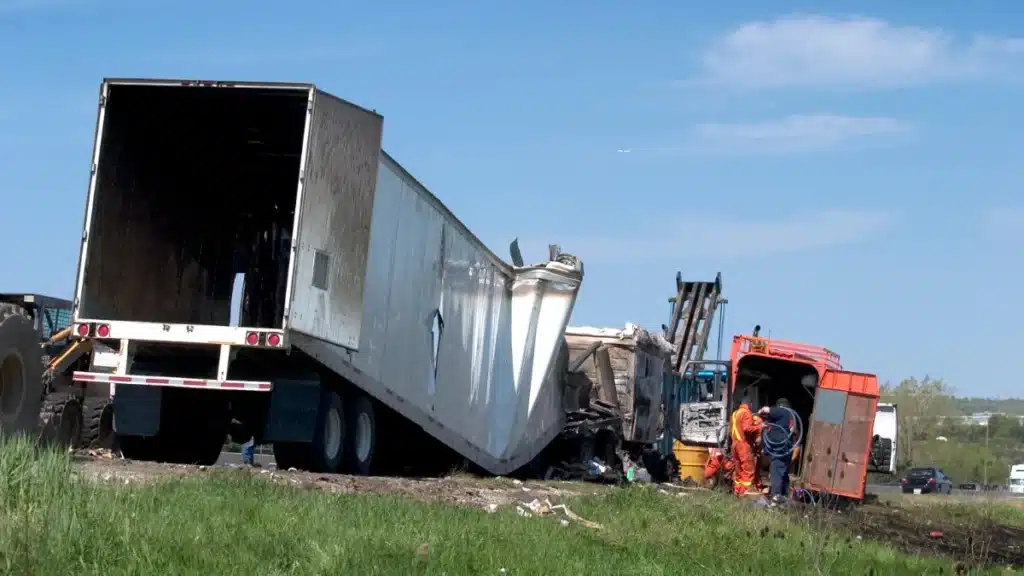
Around large commercial trucks, these failures often lead to high-speed impacts with devastating consequences.
Common Fatigued Driving Crash Scenarios Involving Trucks
Rear-End Collisions
Fatigued drivers fail to recognize slowing traffic and crash into the back of tractor-trailers.
Lane Departure Crashes
Drowsy drivers drift into adjacent lanes and sideswipe or strike trucks.
Intersection Violations
Fatigue causes missed red lights and stop signs, resulting in severe T-bone crashes.
Wrong-Way Driving
Extreme fatigue can lead to disorientation and wrong-way entries on roadways.
Injuries Truck Drivers Suffer in Fatigued Driving Crashes
Even when the truck driver does everything right, drowsy driving crashes often cause:
- Traumatic brain injuries (TBIs)
- Neck and back injuries
- Herniated discs and nerve damage
- Spinal cord injuries
- Orthopedic injuries
- Chronic pain
- Psychological trauma, including PTSD
These injuries can threaten or end a trucking career.
How Fatigued Driving Is Proven in Tennessee Truck Accident Cases
Drowsy driving is not always obvious—but strong evidence often reveals the truth.
1) Driver Activity and Work Schedules
Evidence may include:
- Long work shifts
- Overnight driving patterns
- Inconsistent or excessive hours
- Employer records (for working drivers)
These patterns often support fatigue claims.
2) Cell Phone and App Usage Data
Phone records may show:
- No activity for long periods before the crash (suggesting sleep)
- Sudden activity immediately before impact
- Navigation use consistent with overnight or extended driving
3) Witness Statements
Witnesses may observe:
- Lane drifting
- Delayed braking
- Slow or absent reactions
- Erratic driving before the crash
4) Dash Cam and Video Evidence
Video footage may capture:
- Failure to brake
- Drifting behavior
- Missed traffic signals
- Impact without evasive maneuvers
5) Crash Reconstruction and Vehicle Data
Experts analyze:
- Absence of braking
- Speed at impact
- Reaction timing
- Physical evidence inconsistent with alert driving
Fatigued Driving vs. Drunk Driving: Legal Similarities
While Tennessee has strict DUI laws, fatigued driving:
- Is equally dangerous
- Is often treated as negligent behavior
- Can support civil liability claims
- May qualify as reckless conduct in severe cases
Civil injury claims do not require a criminal charge—only proof of negligence.
Tennessee Comparative Fault and Fatigued Driving Claims
Insurance companies may still attempt to shift blame to truck drivers by alleging:
- Speed issues
- Failure to avoid the crash
- Improper lane positioning
Tennessee’s modified comparative fault rule means evidence is critical to prevent unfair fault assignment.
Workers’ Compensation and Third-Party Claims
If you were working at the time of the crash, workers’ compensation may cover:
- Medical treatment
- Partial wage replacement
However, when a fatigued driver caused the crash, you may pursue a third-party injury claim for:
- Pain and suffering
- Full lost income
- Future earning capacity
- Long-term disability impact
These claims often proceed simultaneously.
Why Insurance Companies Downplay Fatigued Driving
Fatigue cases are harder to prove than DUI cases. Insurers know this and often:
- Claim there’s “no proof” of fatigue
- Minimize behavioral indicators
- Push blame onto truck drivers
- Rush low settlements
This is why early investigation matters.
Mistakes Injured Truck Drivers Should Avoid
- Giving recorded statements without legal guidance
- Delaying medical treatment
- Allowing phone or vehicle data to be erased
- Accepting insurer narratives without investigation
- Settling before understanding long-term injury impact
These missteps weaken strong cases.
How Tennessee Accident Law Builds Fatigued Driving Truck Accident Cases
We take fatigue cases seriously:
- Early evidence preservation
- Analysis of schedules, data, and behavior
- Independent crash reconstruction
- Comprehensive medical causation development
- Aggressive insurance negotiation
- Trial-ready preparation
We understand trucking realities and how to expose negligent driving.

Take Action Now—Before Evidence Is Lost
If you were injured when a fatigued driver crashed into your semi in Tennessee, don’t let insurance companies dismiss what happened.
Complete our free case evaluation form and call us now at 615-212-9866. We’ll review your case, explain your options, and fight for the compensation you deserve.
Sources
- NHTSA – Drowsy Driving Research and Statistics
Explains the dangers, indicators, and crash risks associated with fatigued driving.
https://www.nhtsa.gov/road-safety/drowsy-driving - CDC – Sleep and Motor Vehicle Crash Risk
Details how sleep deprivation impairs driving performance.
https://www.cdc.gov/sleep/features/drowsy-driving.html - FMCSA – Large Truck Crash Causation Study
Analyzes contributing factors in crashes involving commercial vehicles.
https://www.fmcsa.dot.gov/safety/data-and-statistics