
Truck drivers depend on their equipment to work safely. Brakes, tires, steering components, coupling systems, and other critical parts must function properly every mile of every trip. When a defective truck part fails, the results can be catastrophic—causing crashes, rollovers, jackknifes, or loss of control that seriously injure the driver who did nothing wrong.
At Tennessee Accident Law, we represent truck drivers injured in accidents caused by defective or dangerously designed truck parts. These cases are not ordinary accident claims—they are product liability cases, often involving manufacturers, distributors, and maintenance providers who aggressively deny responsibility. This article explains how defective truck parts cause crashes, who can be held liable, and how injured truck drivers in Tennessee can pursue full compensation.
If you have immediate questions, call us at (615) 212-9866 or complete our free case evaluation form now.
What Is a Defective Truck Part?
A truck part may be considered defective when it is:
- Defectively designed (unsafe even when made correctly)
- Defectively manufactured (errors during production)
- Defectively marketed (failure to warn or provide instructions)
When these defects cause or contribute to a crash, injured truck drivers may have a product liability claim.
Why Defective Parts Are So Dangerous for Truck Drivers
Commercial trucks operate under extreme conditions:
- Heavy loads
- Long hours
- High speeds
- Frequent braking
- Extreme temperatures
A single defective component can trigger a chain reaction that leaves a driver with no way to avoid a crash—especially when failure occurs suddenly and without warning.
Common Defective Truck Parts That Cause Serious Accidents
Brake System Failures
Defective brake components can cause:
- Brake fade
- Delayed braking response
- Total brake failure
Brake failures often result in rear-end collisions, jackknifes, or runaway trucks.
Tire Defects
Defective or recalled tires may:
- Blow out at highway speeds
- Lose tread
- Cause sudden loss of control
Tire failures are especially dangerous on curves or during lane changes.
Steering and Suspension Defects
Failures in steering columns, tie rods, or suspension components can cause:
- Loss of steering control
- Sudden veering
- Rollover accidents
Coupling and Trailer Connection Failures
Defective fifth wheels, kingpins, or locking mechanisms can lead to:
- Trailer detachment
- Sudden instability
- Multi-vehicle collisions
Lighting and Visibility Defects
Defective lights or reflectors increase crash risk by:
- Reducing visibility
- Preventing other drivers from seeing the truck
- Contributing to rear-end or underride crashes
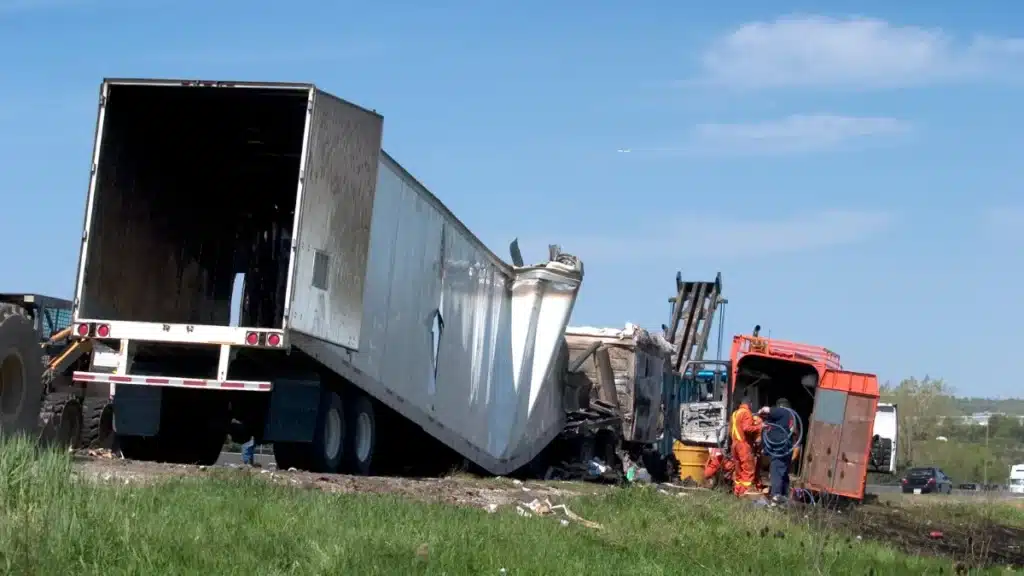
How Defective Truck Parts Cause Crashes Without Driver Error
Defective parts often fail:
- Without warning
- During normal operation
- Despite proper maintenance
- In compliance with all regulations
When a component fails unexpectedly, even the safest driver may be unable to prevent the resulting crash.
Who Can Be Held Liable in a Defective Truck Part Case?
Product liability cases often involve multiple defendants.
Potentially Liable Parties Include:
- Manufacturers
- Parts suppliers
- Distributors
- Truck or trailer manufacturers
- Maintenance and repair companies
- Fleet operators (in some cases)
Identifying all responsible parties is critical to maximizing recovery.
Types of Product Liability Claims in Tennessee
Design Defect Claims
Argue that a part was inherently unsafe due to poor design—even if manufactured correctly.
Manufacturing Defect Claims
Focus on errors during production that made the part unsafe.
Failure-to-Warn Claims
Allege that manufacturers failed to warn about known risks or provide proper instructions.
Tennessee product liability law allows recovery when defects cause injury.
Evidence That Proves a Defective Truck Part Caused the Crash
Product liability cases are won through preservation and expert analysis.
1) Preservation of the Defective Part
The failed component must be preserved for inspection. Spoliation can destroy a case.
2) Maintenance and Inspection Records
Records may show:
- Proper maintenance
- Compliance with service schedules
- No misuse by the driver
This helps eliminate driver fault arguments.
3) Recall and Defect History
Evidence of:
- Prior recalls
- Known defect patterns
- Manufacturer warnings
This strengthens liability claims.
4) Expert Engineering Analysis
Experts examine:
- Failure mode
- Design flaws
- Manufacturing errors
- Compliance with safety standards
Expert testimony is often essential.
5) Accident Reconstruction
Reconstruction connects the part failure to the crash and shows the driver acted reasonably.
Injuries Truck Drivers Commonly Suffer Due to Defective Parts
Defective part crashes often cause:
- Traumatic brain injuries (TBIs)
- Neck and back injuries
- Herniated discs
- Spinal cord injuries
- Orthopedic injuries
- Burns or fire-related injuries
- Permanent disability
These injuries can end a trucking career.
Workers’ Compensation vs. Product Liability Claims
If you were driving for work:
- Workers’ compensation may cover medical bills and partial wages
However, workers’ comp does not cover:
- Pain and suffering
- Full wage loss
- Future earning capacity
- Permanent impairment
A product liability claim against manufacturers or suppliers may be necessary to recover full compensation—and can proceed alongside workers’ comp.
Tennessee Comparative Fault and Defective Product Claims
Defendants often argue:
- Improper maintenance
- Driver misuse
- Failure to inspect
Strong evidence is essential to show:
- Proper operation
- Reasonable inspections
- That the defect—not the driver—caused the failure
Tennessee’s modified comparative fault rule makes this especially important.
Why Defective Truck Part Cases Are Heavily Contested
Manufacturers and suppliers often:
- Deny defects
- Blame maintenance or driver error
- Dispute expert findings
- Engage in aggressive litigation
These cases require experienced, trial-ready representation.
Common Mistakes Injured Truck Drivers Should Avoid
- Allowing the defective part to be discarded
- Authorizing repairs before inspection
- Giving statements without legal guidance
- Assuming recalls automatically guarantee recovery
- Settling before expert analysis
Preserving evidence is critical.
How Tennessee Accident Law Handles Defective Truck Part Cases
We know how to take on manufacturers and corporate defendants:
- Immediate preservation letters
- Coordination with engineering experts
- Recall and defect investigation
- Identification of all liable parties
- Coordination with workers’ comp claims
- Trial-ready case preparation
We understand product liability law and trucking operations.

Take Action Now—Defective Product Claims Are Time-Sensitive
If you were injured in a Tennessee truck accident caused by a defective truck part—and the crash was not your fault—do not let manufacturers or insurers escape accountability.
Complete our free case evaluation form and call us now at 615-212-9866. We’ll review your case, explain your options, and fight for the full compensation you deserve.
Sources
- FMCSA – Vehicle Maintenance and Safety Regulations
Outlines federal safety standards for commercial vehicle components.
https://www.fmcsa.dot.gov/safety/vehicle-maintenance - National Highway Traffic Safety Administration – Vehicle Defects and Recalls
Provides information on recalls and defect investigations.
https://www.nhtsa.gov/recalls - Tennessee Product Liability Act
Governs product liability claims in Tennessee.
https://law.justia.com/codes/tennessee/