
Few injuries are more devastating than damage to the brain or spinal cord. In a matter of seconds, a truck accident can change a victim’s life forever — stripping away mobility, independence, or even consciousness.
Across Tennessee — from Nashville and Franklin to Knoxville and Memphis — our highways are crowded with massive commercial vehicles weighing up to 80,000 pounds. When negligence strikes, the results are catastrophic.
At Tennessee Accident Law, we’ve represented hundreds of victims suffering traumatic brain and spinal cord injuries caused by careless truck drivers and corporations that cut safety corners. This article explains what victims and their families need to know about these severe injuries, their long-term effects, and how Tennessee law protects your right to full compensation.
Call us now at 615-212-9866 to speak with an experienced attorney about your truck accident case.
The Impact of Brain and Spinal Cord Injuries
Truck collisions often cause intense force on the human body. Even at moderate speeds, the impact can cause the head or spine to twist, bend, or collide with vehicle structures — leading to permanent neurological damage.
These injuries are classified as catastrophic because they fundamentally alter a person’s ability to live, work, or care for themselves. Victims often face lifelong medical care, emotional trauma, and financial strain.
Traumatic Brain Injuries (TBI) After a Truck Crash
A traumatic brain injury occurs when the brain sustains a sudden impact or lack of oxygen due to trauma. In truck accidents, TBIs are commonly caused by:
- Blunt force from hitting the dashboard or window
- Rapid deceleration (whiplash effect)
- Flying debris or crushed vehicle structures
- Oxygen deprivation after head trauma
Common Types of TBIs
- Concussion: Mild to moderate brain injury causing headaches, confusion, and memory loss.
- Contusion: A bruise or bleeding on the brain’s surface.
- Diffuse Axonal Injury: Damage from violent shaking or twisting of the brain.
- Penetrating Injury: Caused by sharp debris entering the skull.
Symptoms of Brain Injury
Victims may experience:
- Headaches, dizziness, and blurred vision
- Loss of coordination or speech difficulty
- Personality changes or mood swings
- Concentration and memory problems
- Seizures or loss of consciousness
Even “mild” TBIs can cause long-term cognitive and emotional challenges — often requiring ongoing therapy, medication, and support.
Spinal Cord Injuries (SCI) After Truck Accidents
The spinal cord is the body’s communication center, transmitting messages between the brain and the rest of the body. When this delicate system is damaged, the consequences can be permanent.
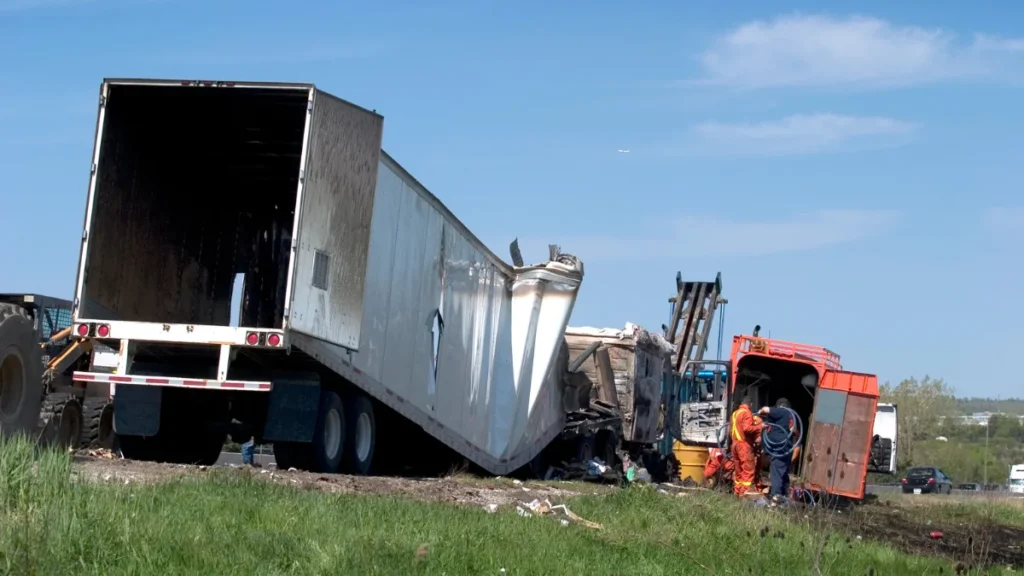
Truck accidents are among the leading causes of traumatic spinal cord injuries in Tennessee, particularly on high-speed routes like I-65, I-40, and I-24.
Types of Spinal Cord Injuries
- Incomplete SCI: Partial loss of function below the injury site — victims may retain limited sensation or movement.
- Complete SCI: Total loss of motor and sensory function below the injury site, leading to paraplegia or quadriplegia.
Common Symptoms
- Loss of movement or feeling
- Numbness or tingling in limbs
- Chronic pain or pressure in the back and neck
- Difficulty breathing or controlling bladder/bowel function
These symptoms often appear immediately after the crash — but sometimes develop hours later, underscoring the importance of immediate medical attention.
Long-Term Consequences
Brain and spinal injuries are not short-term medical issues. Victims frequently require:
- Lifelong physical therapy or occupational rehabilitation
- Home modifications and assistive equipment (wheelchairs, lifts, ramps)
- In-home nursing or caregiving support
- Ongoing neurological or psychological care
- Loss of independence or employment
According to the National Spinal Cord Injury Statistical Center (NSCISC), the lifetime cost of a spinal injury can exceed $2 million, depending on the patient’s age and severity of paralysis.
How Tennessee Law Protects Victims
Tennessee law recognizes catastrophic injury victims need far greater compensation than typical accident cases. Victims can recover both economic and non-economic damages, including:
- Medical expenses (past and future)
- Lost income and reduced earning potential
- Pain and suffering
- Emotional distress
- Loss of enjoyment of life
- Cost of home modifications or caregiving
- Punitive damages for gross negligence
Under Tennessee’s modified comparative fault rule (T.C.A. § 29-11-103), victims can still recover compensation even if they were partially at fault — as long as they’re less than 50% responsible.
Proving Negligence in Brain and Spinal Cord Injury Cases
These cases demand meticulous investigation. Trucking companies and their insurers often try to deny liability, minimize injuries, or shift blame.
At Tennessee Accident Law, we build airtight cases by:
- Collecting black box data (vehicle speed, braking, and rest hours)
- Reviewing driver logs to identify fatigue or rule violations
- Examining maintenance records for equipment failure
- Interviewing eyewitnesses and first responders
- Working with neurologists and medical experts to explain your condition
When companies cut corners — by hiring unqualified drivers or skipping inspections — we expose their negligence through hard evidence.
Federal Regulations That Often Influence These Claims
The Federal Motor Carrier Safety Administration (FMCSA) enforces safety standards to prevent exactly these kinds of tragedies. Violations that often lead to brain or spinal injuries include:
- Driving beyond legal Hours-of-Service (fatigue)
- Overloaded or unbalanced cargo
- Defective brakes or tires
- Distracted or impaired driving
- Failure to maintain equipment
When we prove a company violated these federal laws, it strengthens your case under the legal principle of negligence per se — meaning the act itself constitutes negligence.
Challenges in Brain and Spinal Injury Claims
Trucking corporations and insurers will often:
- Claim your injuries existed before the crash
- Question the severity of your symptoms
- Argue that medical costs are excessive
- Push early, lowball settlements
These tactics are designed to reduce payouts — not reflect your reality.
That’s why it’s critical to have an attorney with medical knowledge, trial experience, and the determination to fight back.
The Role of Expert Testimony
Because these injuries are complex, expert testimony is crucial.
We collaborate with:
- Neurologists to explain brain trauma mechanisms
- Spinal surgeons to discuss long-term impairment
- Economists to project future financial losses
- Rehabilitation specialists to demonstrate daily challenges
Their expertise helps juries understand the full human and financial cost of catastrophic injury.
Why These Cases Often Lead to High-Value Settlements
Brain and spinal cord injuries typically result in multi-million-dollar settlements or verdicts, especially when:
- The victim is permanently disabled
- The trucking company violated federal safety standards
- The injuries require lifelong care
- The victim loses future earning capacity
Courts recognize the immense burden placed on victims and families — and award damages accordingly.
At Tennessee Accident Law, we’ve helped families recover life-changing settlements that secure medical care and financial stability for decades to come.

Why Choose Tennessee Accident Law
- Over 20 years of experience in catastrophic truck injury cases
- Deep understanding of medical and federal trucking law
- Proven success in multi-million-dollar verdicts and settlements
- Plaintiff-only representation — we never defend insurers
- Compassionate advocacy focused on rebuilding your future
We don’t just handle cases — we stand beside victims and families every step of the way.
Get the Help You Deserve
If you or a loved one has suffered a brain or spinal cord injury in a Tennessee truck accident, you don’t have to face this alone.
Our attorneys will fight to hold negligent companies accountable and secure the financial support you need for lifelong care.
Contact Tennessee Accident Law for a free case evaluation or call 615-212-9866.
We’ll help you reclaim your life — one step, one victory at a time.
Sources
- National Spinal Cord Injury Statistical Center (NSCISC) — Lifetime cost and outcome data.
- Federal Motor Carrier Safety Administration (FMCSA) — Commercial carrier safety and HOS rules.
- Brain Injury Association of America (BIAA) — Resources and rehabilitation support for TBI victims.