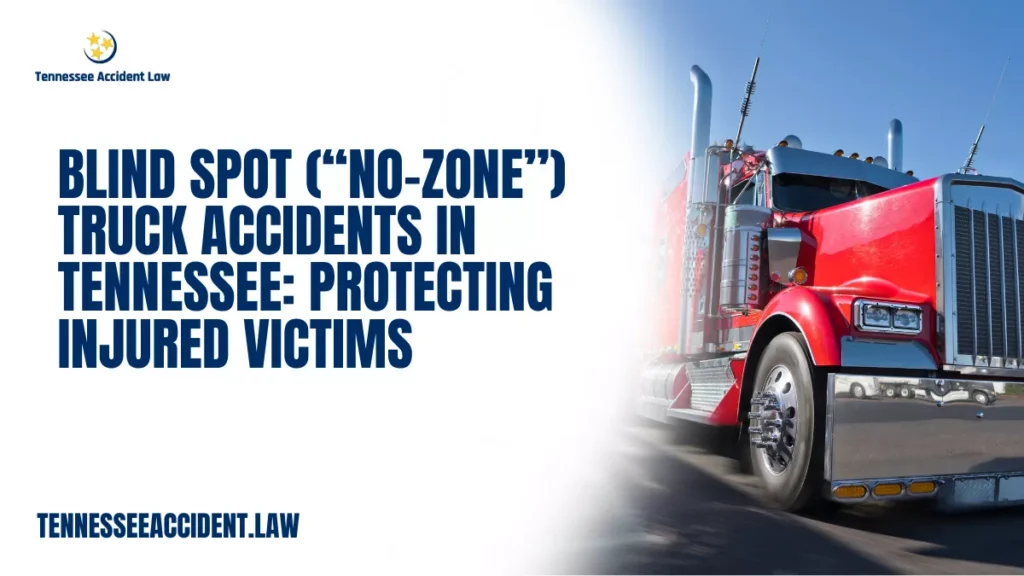
Commercial trucks have massive blind spots—often called “no-zones”—where passenger vehicles can disappear from a truck driver’s view. When truck drivers fail to properly check these blind spots before changing lanes or turning, the results can be catastrophic. Across Tennessee highways such as I-40, I-24, and I-65, blind spot truck accidents cause serious injuries and tragic fatalities every year.
At Tennessee Accident Law, we represent victims throughout Tennessee who were injured in blind spot truck accidents. These cases often involve clear safety violations, and we work aggressively to hold negligent truck drivers and trucking companies accountable.
If you have immediate questions, call us at (615) 212-9866 or complete our free case evaluation form now.
What Are a Truck’s “No-Zones”?
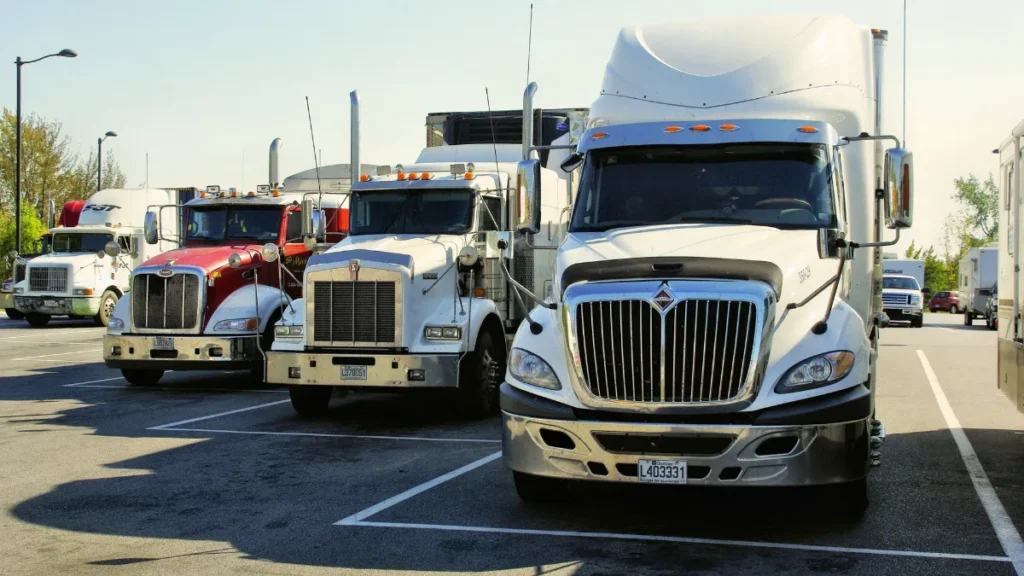
A commercial truck’s blind spots are significantly larger than those of a standard passenger vehicle. These no-zones typically include:
- Directly in front of the truck
- Directly behind the trailer
- Along both sides of the truck—especially the right side
- Areas near wide-turn paths
Because tractor-trailers can be over 70 feet long, vehicles traveling beside them may be completely invisible to the driver without proper mirror checks.
Why Blind Spot Truck Accidents Are So Dangerous
Blind spot crashes often occur at highway speeds or during merging, which increases the severity of the impact.
Common blind spot accident scenarios include:
- A truck changing lanes into a vehicle traveling alongside it
- A truck making a wide right turn and striking a vehicle
- A truck merging onto a highway without checking mirrors
- A truck drifting into another lane due to distraction or fatigue
These crashes frequently force smaller vehicles off the road, into guardrails, or beneath the trailer.
Common Causes of Blind Spot Truck Accidents in Tennessee
Most blind spot accidents are preventable. They often occur because truck drivers or companies fail to follow proper safety protocols.
Failure to Properly Check Mirrors
Drivers must continuously monitor mirrors and blind spot areas before changing lanes or turning.
Distracted Driving
Using cellphones or in-cab devices can prevent drivers from noticing nearby vehicles.
Driver Fatigue
Fatigue reduces awareness and reaction time, making blind spot errors more likely.
Inadequate Training
Trucking companies must properly train drivers to manage blind spot risks and wide-turn procedures.
Lack of Safety Technology
Failure to maintain or install blind spot monitoring systems may contribute to accidents.
Injuries Commonly Suffered in Blind Spot Truck Accidents
Blind spot crashes often result in severe injuries due to the size and weight of the truck.
Traumatic Brain Injuries
Side-impact or forced-off-road crashes frequently result in head trauma.
Spinal Cord Injuries
Neck and back injuries, including paralysis, are common in lane-change collisions.
Crush Injuries
Vehicles trapped between trucks and barriers may suffer significant structural damage, leading to crush injuries.
Internal Organ Damage
High-speed side impacts can cause internal bleeding and life-threatening injuries.
Who Can Be Held Liable in a Blind Spot Truck Accident?
Liability may extend beyond the truck driver.
Truck Drivers
Drivers who fail to check blind spots, signal properly, or follow safe lane-change procedures may be held responsible.
Trucking Companies
Trucking companies may be liable for:
- Inadequate driver training
- Failure to enforce safety policies
- Unsafe scheduling practices
- Poor maintenance of mirrors and safety systems
Third Parties
Maintenance providers or equipment manufacturers may share responsibility if defective mirrors or blind spot systems contributed to the crash.
We conduct comprehensive investigations to identify all liable parties.
Compensation Available to Blind Spot Accident Victims
Victims injured in blind spot truck accidents may be entitled to compensation for:
- Emergency and long-term medical expenses
- Rehabilitation and therapy
- Lost wages and reduced earning capacity
- Pain and suffering
- Emotional distress
- Permanent disability
- Wrongful death damages for surviving families
Because these crashes often involve commercial insurance policies, substantial compensation may be available.
Why Trucking Companies Dispute Blind Spot Claims
Trucking companies and insurers often attempt to shift blame to passenger vehicle drivers, arguing they were “lingering” in the blind spot. Common defense strategies include:
- Claiming the victim failed to pass quickly
- Disputing vehicle positioning
- Minimizing injury severity
- Offering early, low settlement amounts
At Tennessee Accident Law, we use accident reconstruction, dash cam footage, black box data, and witness testimony to counter these tactics.
How Tennessee Accident Law Helps Blind Spot Truck Accident Victims
Our firm has decades of experience handling complex truck accident litigation across Tennessee. When you work with us, we:
- Preserve electronic logging and vehicle data
- Analyze trucking company compliance with FMCSA regulations
- Work with accident reconstruction experts
- Handle all communications with insurers
- Prepare cases for trial
- Charge no fees unless we recover compensation
We represent only injured victims and their families.

Speak With a Tennessee Truck Accident Lawyer Today
If you or a loved one was injured in a blind spot truck accident in Tennessee, you deserve experienced legal representation and strong advocacy.
Contact Tennessee Accident Law today by completing our free case evaluation form or calling 615-212-9866 to speak with an experienced Tennessee truck accident lawyer.
Sources
- Federal Motor Carrier Safety Administration (FMCSA) – Safety guidelines for commercial truck operations and driver training.
https://www.fmcsa.dot.gov - National Highway Traffic Safety Administration (NHTSA) – Research on large truck crashes and lane-change accidents.
https://www.nhtsa.gov - Insurance Institute for Highway Safety (IIHS) – Data on crash patterns involving large trucks.
https://www.iihs.org