
Cargo spills create sudden, deadly hazards on Tennessee roads. When freight falls from a truck, trailer, or passenger vehicle—or shifts improperly during transit—the results can be catastrophic for nearby drivers. For professional truck drivers, a cargo spill can force evasive maneuvers, trigger jackknifes or rollovers, or cause violent collisions that lead to serious injuries and lost livelihoods.
At Tennessee Accident Law, we represent truck drivers injured in cargo spill crashes that were not their fault. These cases are often complex because liability may rest with multiple parties—shippers, loaders, brokers, maintenance providers, or negligent drivers. This article explains how cargo spill accidents happen, who may be responsible, and how injured truck drivers in Tennessee can protect their rights and pursue full compensation.
If you have immediate questions, call us at (615) 212-9866 or complete our free case evaluation form now.
What Is a Cargo Spill Crash?
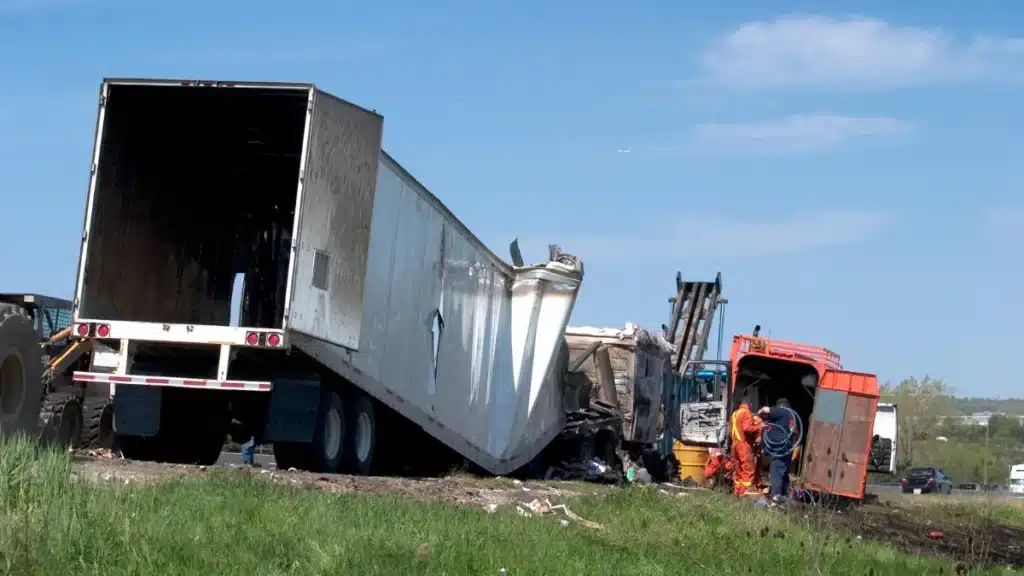
A cargo spill crash occurs when freight, equipment, or materials fall, leak, or scatter onto the roadway, creating an immediate hazard. Spills may involve:
- Palletized goods
- Construction materials
- Lumber or pipes
- Agricultural products
- Hazardous materials
- Tools or unsecured equipment
For truck drivers, even a small spill can cause loss of traction, sudden braking, swerving, or impact—often with little time to react.
Why Cargo Spills Are Especially Dangerous for Truck Drivers
Commercial trucks:
- Require longer stopping distances
- Are sensitive to sudden traction changes
- Can jackknife if braking balance is disrupted
- May roll over if a swerve is required at highway speeds
When cargo spills unexpectedly, a truck driver may have no safe option—especially in traffic, on bridges, or in construction zones.
Common Causes of Cargo Spill Accidents
Improper Loading
Cargo that is not evenly distributed, properly braced, or adequately secured can shift or fall during normal driving.
Failure to Secure Cargo
Missing straps, worn chains, broken tie-downs, or inadequate blocking can allow loads to come loose.
Overloaded or Unbalanced Trailers
Excess weight or poor load balance increases the risk of spills during turns or braking.
Equipment Failure
Defective doors, latches, tarps, or trailer components can fail, releasing cargo.
Negligent Driving
Sudden lane changes, excessive speed, or sharp turns by the vehicle carrying the cargo can cause spills.
Maintenance Negligence
Worn-out securement devices or poorly maintained trailers contribute to cargo failures.
Who Can Be Held Liable in a Cargo Spill Crash?
Cargo spill cases often involve multiple responsible parties, not just the driver of the vehicle that spilled the load.
Potentially Liable Parties Include:
- The driver who failed to secure the load
- The trucking company
- Shippers and loaders
- Freight brokers
- Third-party loading facilities
- Maintenance providers
- Manufacturers of defective securement equipment
Identifying every liable party is critical to maximizing compensation.
Federal and State Cargo Securement Rules
Cargo securement is governed by strict safety regulations, including:
- Federal Motor Carrier Safety Administration (FMCSA) cargo securement rules
- Weight distribution and tie-down requirements
- Inspection and maintenance standards
Violations of these rules often support negligence claims when a spill occurs.
How Fault Is Proven in a Tennessee Cargo Spill Truck Accident
Cargo spill cases depend on thorough evidence collection and expert analysis.
1) Scene Evidence
Photos and video documenting:
- The spilled cargo
- Location and spread pattern
- Roadway conditions
- Warning devices (or lack thereof)
- Damage to vehicles
This evidence helps establish how and why the spill occurred.
2) Cargo Documentation
Records may include:
- Bills of lading
- Load manifests
- Weight tickets
- Securement checklists
- Inspection reports
These documents reveal who handled and secured the cargo.
3) Dash Cam and Video Footage
Dash cams may capture:
- Cargo falling from a vehicle
- Sudden evasive maneuvers
- Lack of warning by the vehicle ahead
Video evidence can be decisive.
4) Maintenance and Inspection Records
Records may show:
- Worn or defective securement devices
- Missed inspections
- Known equipment issues
Neglect supports liability.
5) Accident Reconstruction
Experts analyze:
- Vehicle speed and movement
- Cargo dynamics
- Reaction times
- Avoidability
Reconstruction often shows the truck driver could not safely avoid the spill.
Injuries Truck Drivers Commonly Suffer in Cargo Spill Crashes
Cargo spill crashes often result in:
- Traumatic brain injuries (TBIs)
- Neck and back injuries
- Herniated discs
- Spinal cord injuries
- Orthopedic injuries
- Burns or chemical exposure (in hazardous material spills)
- Chronic pain
- Psychological trauma
These injuries can permanently limit a truck driver’s ability to work.
Hazardous Material Cargo Spills
When hazardous materials are involved, additional issues arise:
- Chemical burns or inhalation injuries
- Environmental response delays
- Specialized cleanup
- Enhanced regulatory violations
These cases often involve higher damages and additional liable parties.
Workers’ Compensation vs. Third-Party Claims in Cargo Spill Cases
If you were driving for work:
- Workers’ compensation may cover medical care and partial wages
However, workers’ comp does not cover:
- Pain and suffering
- Full lost income
- Long-term earning capacity
- Permanent impairment
When another party’s negligence caused the spill, a third-party injury claim is often necessary to recover full compensation. These claims can proceed alongside workers’ comp.
Tennessee Comparative Fault and Cargo Spill Accidents
Insurance companies may argue:
- You followed too closely
- You should have avoided the debris
- Speed was excessive for conditions
Under Tennessee’s modified comparative fault rule, strong evidence is essential to prevent unfair blame-shifting—especially when the spill occurred suddenly and without warning.
Why Insurance Companies Fight Cargo Spill Claims
Cargo spill cases can involve:
- Multiple insurance policies
- Corporate defendants
- Regulatory violations
Insurers often attempt to:
- Minimize responsibility
- Blame the injured truck driver
- Settle quickly before full investigation
Early legal involvement protects your claim.
Common Mistakes Truck Drivers Should Avoid After a Cargo Spill Crash
- Failing to photograph the spill and scene
- Not identifying the vehicle that spilled the cargo
- Giving recorded statements without legal guidance
- Delaying medical treatment
- Accepting early settlements
Cargo spill evidence disappears fast—action matters.
How Tennessee Accident Law Handles Cargo Spill Truck Accident Cases
We approach cargo spill cases with precision:
- Immediate evidence preservation
- Identification of all responsible parties
- Analysis of cargo securement violations
- Use of reconstruction and safety experts
- Coordination with workers’ comp claims
- Aggressive negotiation backed by litigation readiness
We understand trucking operations, cargo regulations, and injury law.

Take Action Now—Before Evidence Disappears
If you were injured in a Tennessee truck accident caused by a cargo spill that was not your fault, do not let insurance companies shift blame or limit your recovery.
Complete our free case evaluation form and call us now at 615-212-9866. We’ll review your case, explain your options, and fight for the full compensation you deserve.
Sources
- FMCSA – Cargo Securement Rules
Explains federal requirements for securing loads and preventing cargo spills.
https://www.fmcsa.dot.gov/safety/cargo-securement - Federal Motor Carrier Safety Administration – Large Truck Crash Causation Study
Analyzes crash factors, including cargo-related failures.
https://www.fmcsa.dot.gov/safety/data-and-statistics - Tennessee Department of Safety & Homeland Security
Provides information on commercial vehicle enforcement and roadway safety.
https://www.tn.gov/safety/